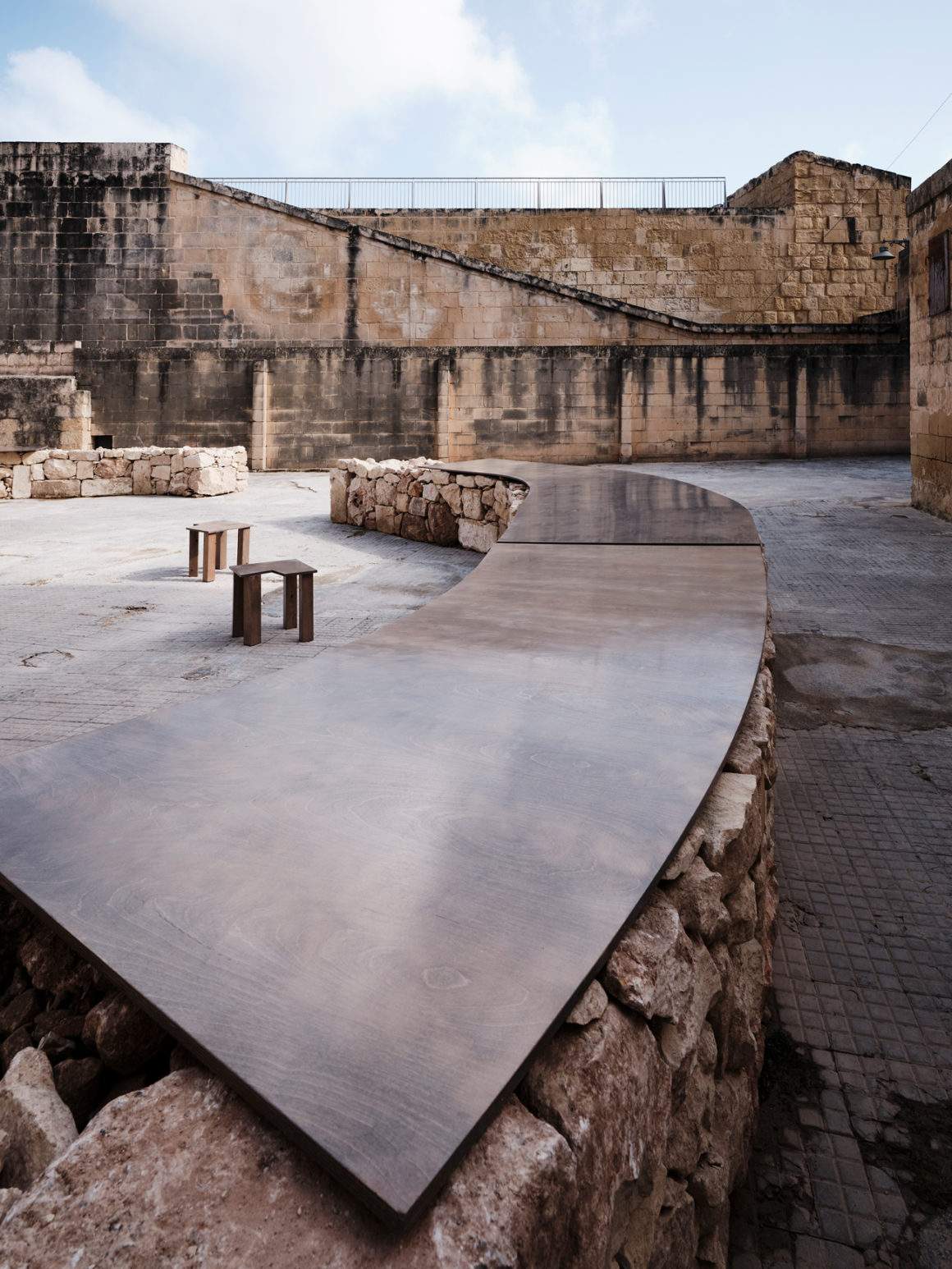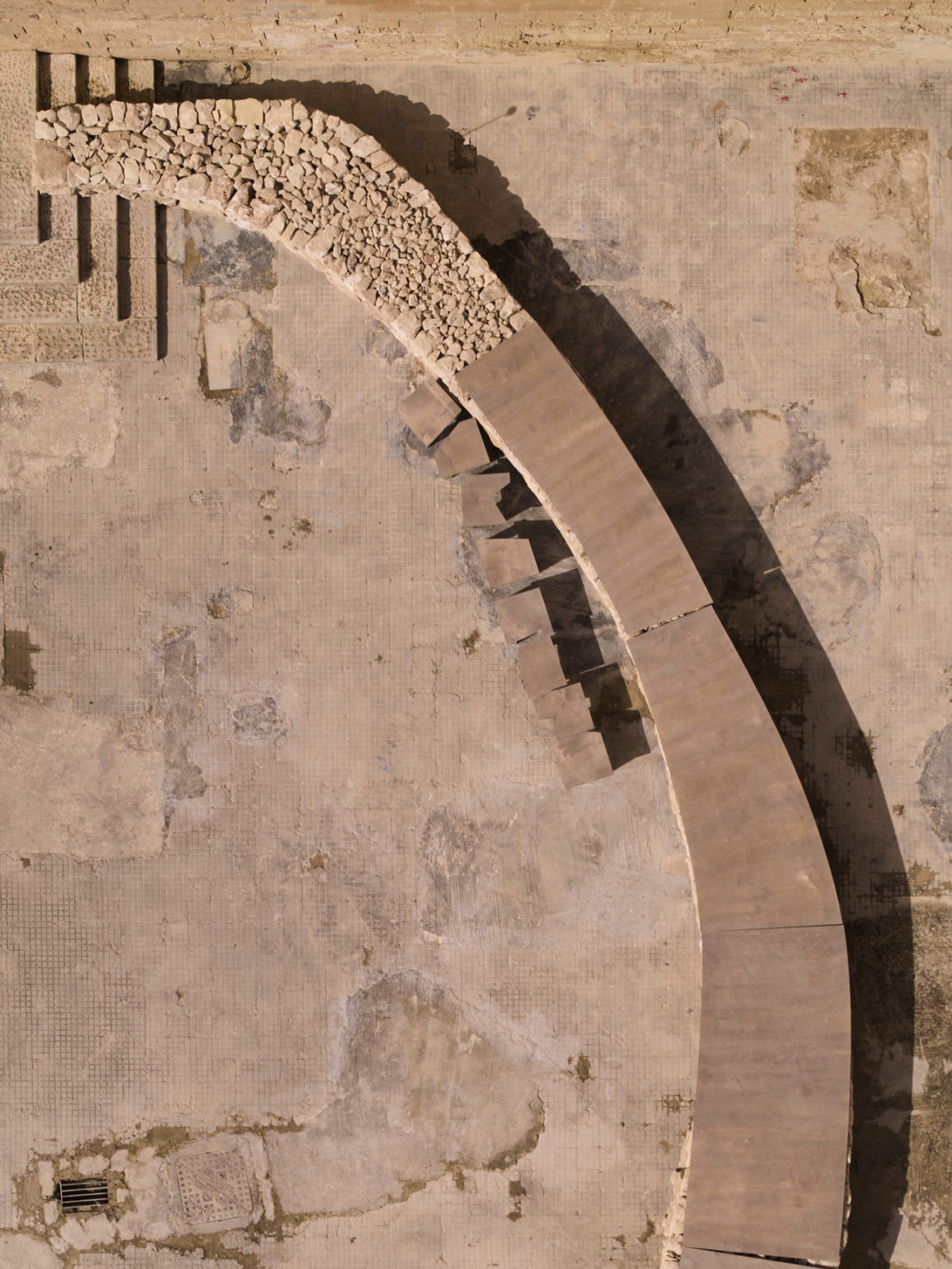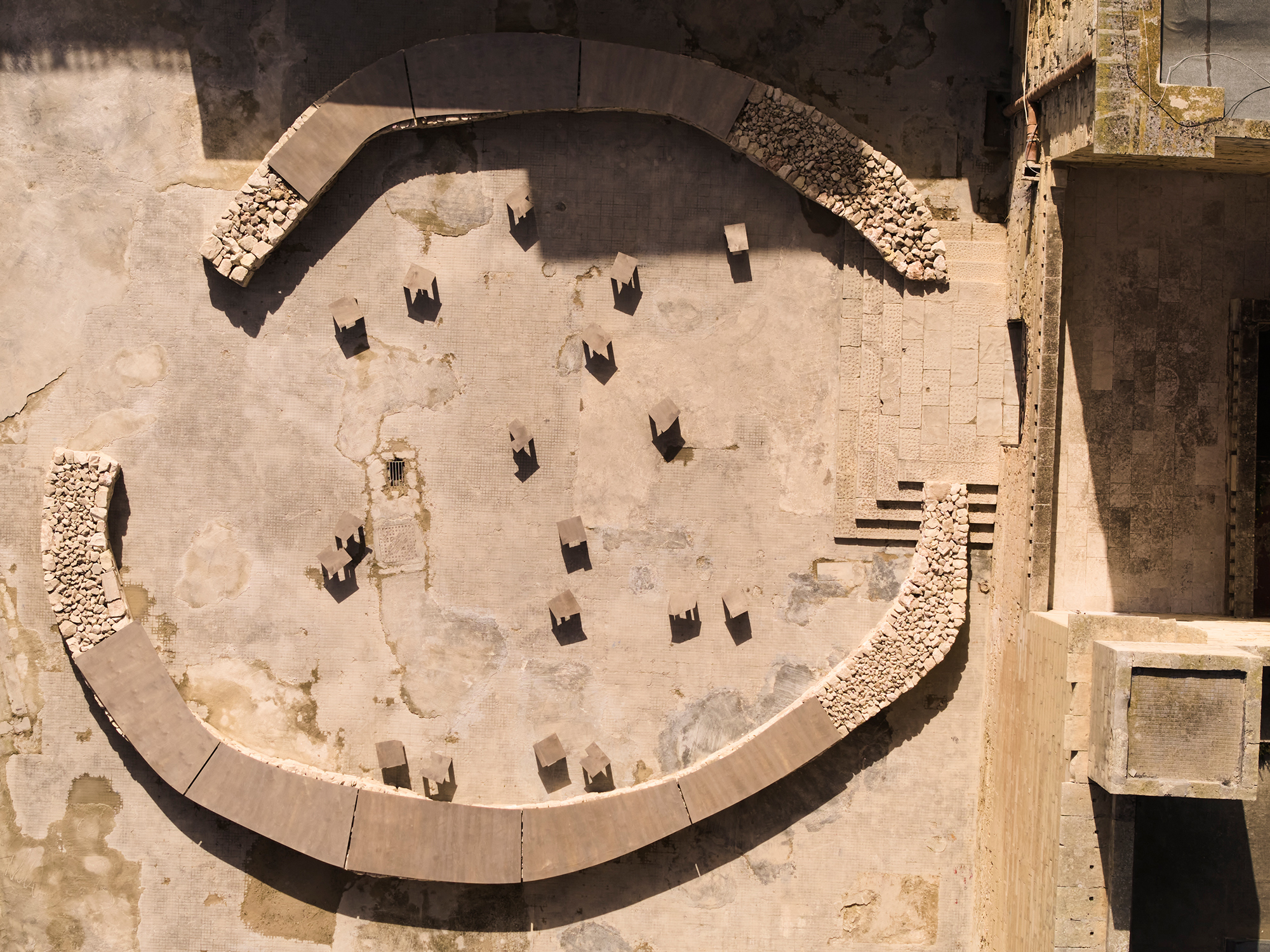
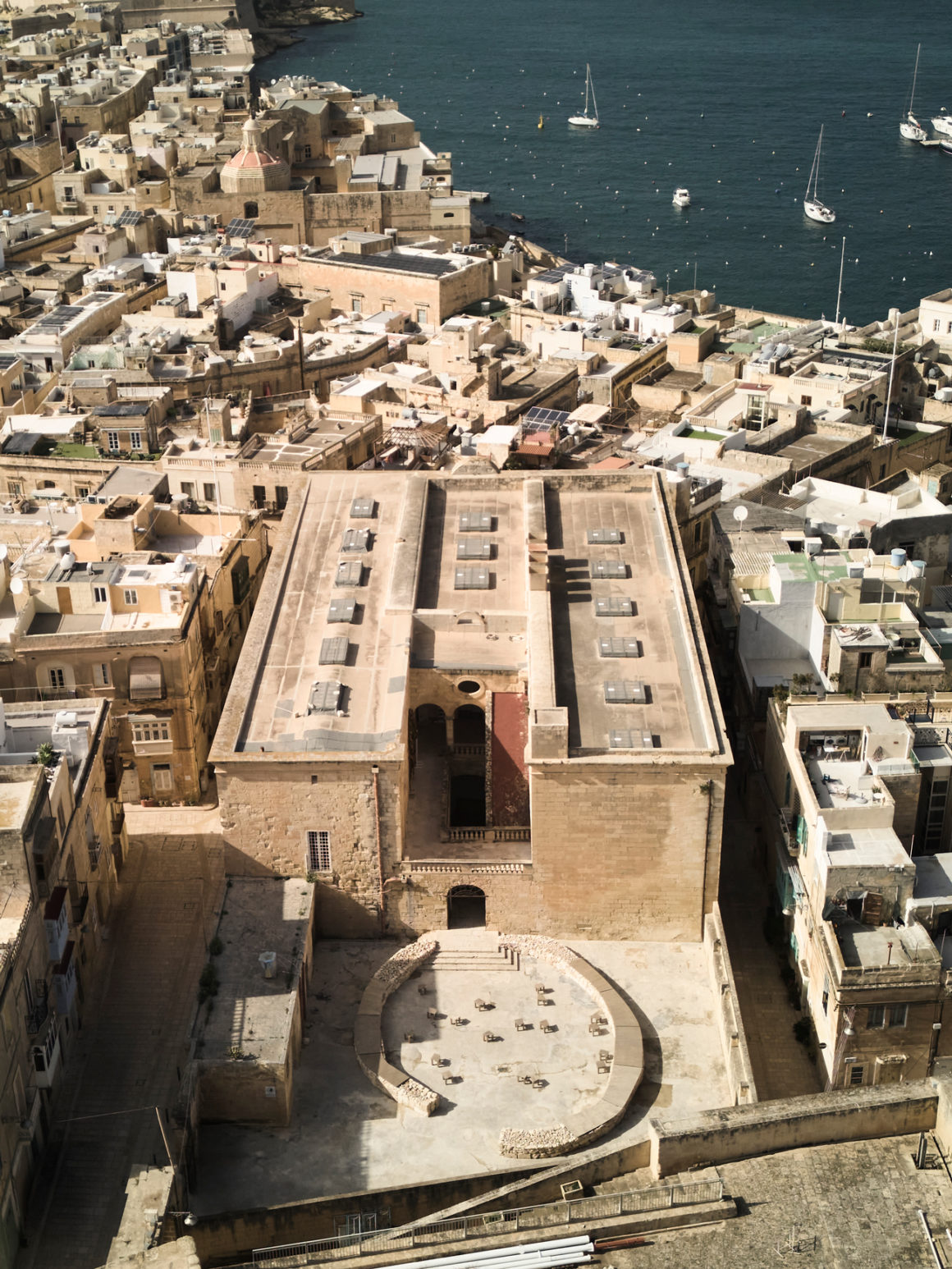
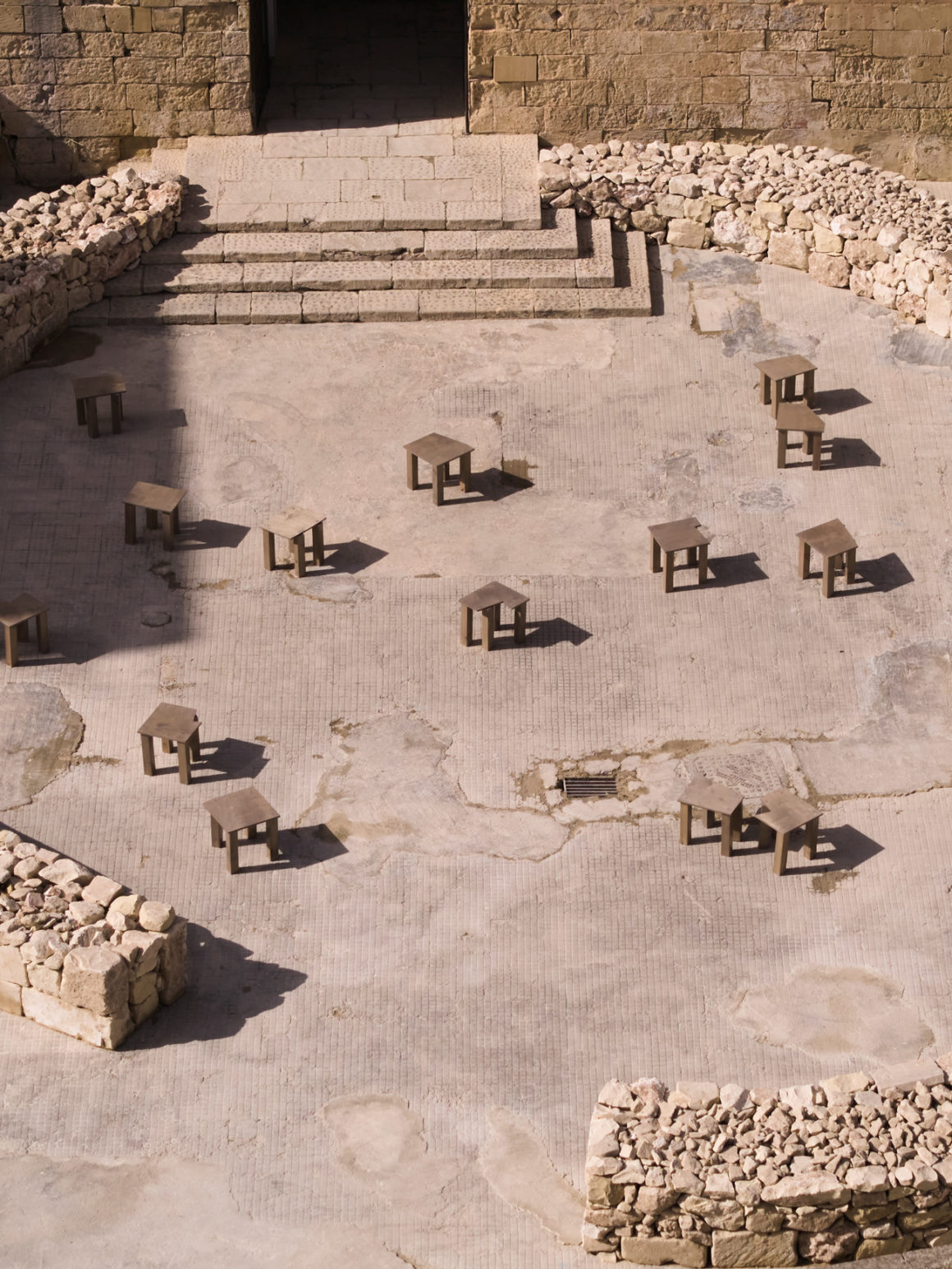
At the entrance of the Malta Biennale 2026 Old Armoury, Greek architects Klelia Siska and Arsenios Zachariadis have taken a familiar element of the Mediterranean landscape and given it an unexpected new role. Titled A Wall That Isn’t One, the pavilion rethinks the dry-stone wall, a structure typically associated with boundaries, agriculture and quiet, manual labour. Found across places like the Cyclades and Malta, these walls are built without mortar and rely on careful placement, balance and a shared construction knowledge passed down over time. Here, that logic remains but its meaning shifts. Using the traditional Maltese technique of ħitan tas sejjieħ, the architects bend the wall into a circle and turn what is usually a line of separation into a place to sit, gather and spend time. The result is a large communal table that welcomes visitors at the Biennale entrance.
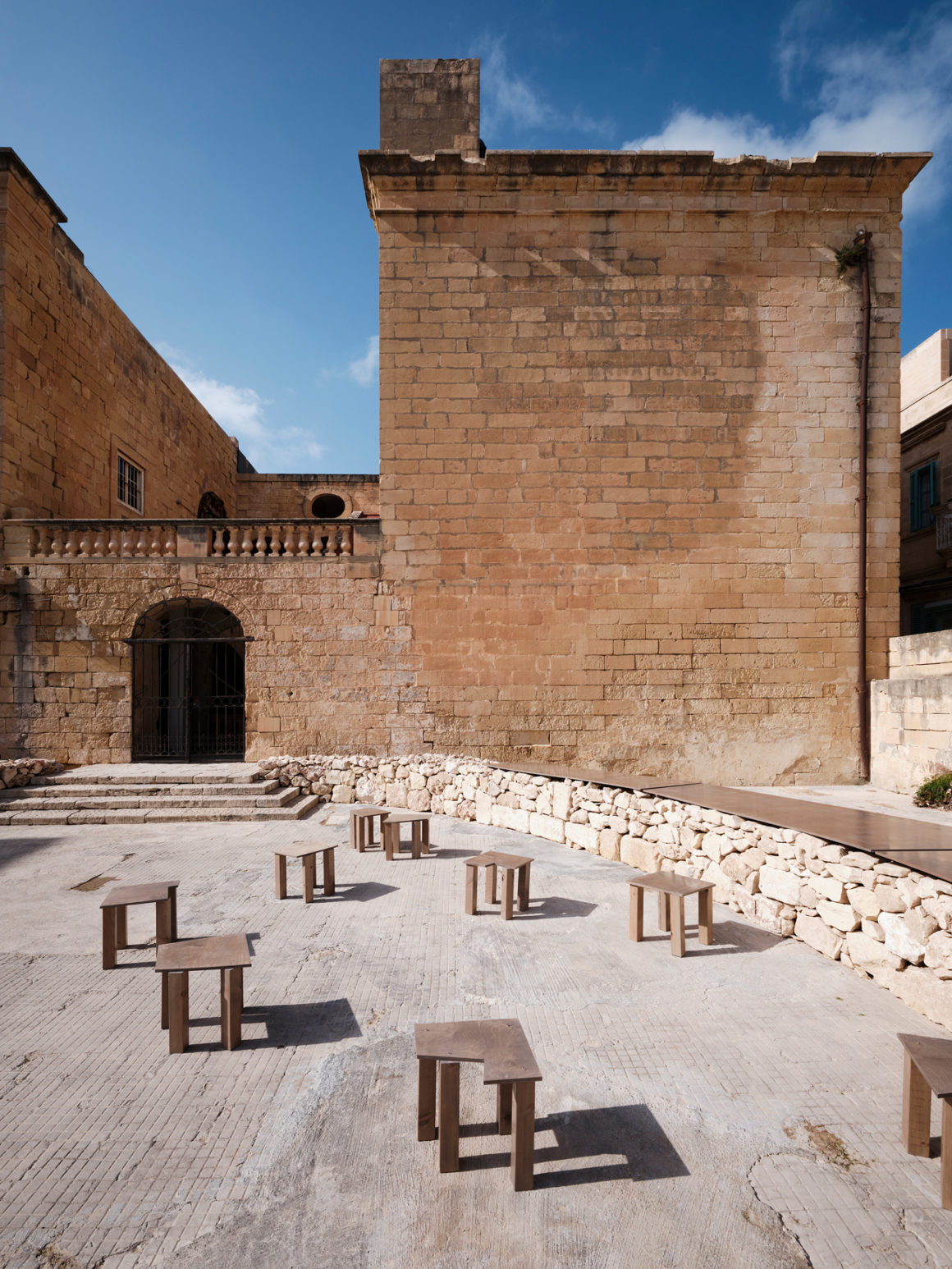
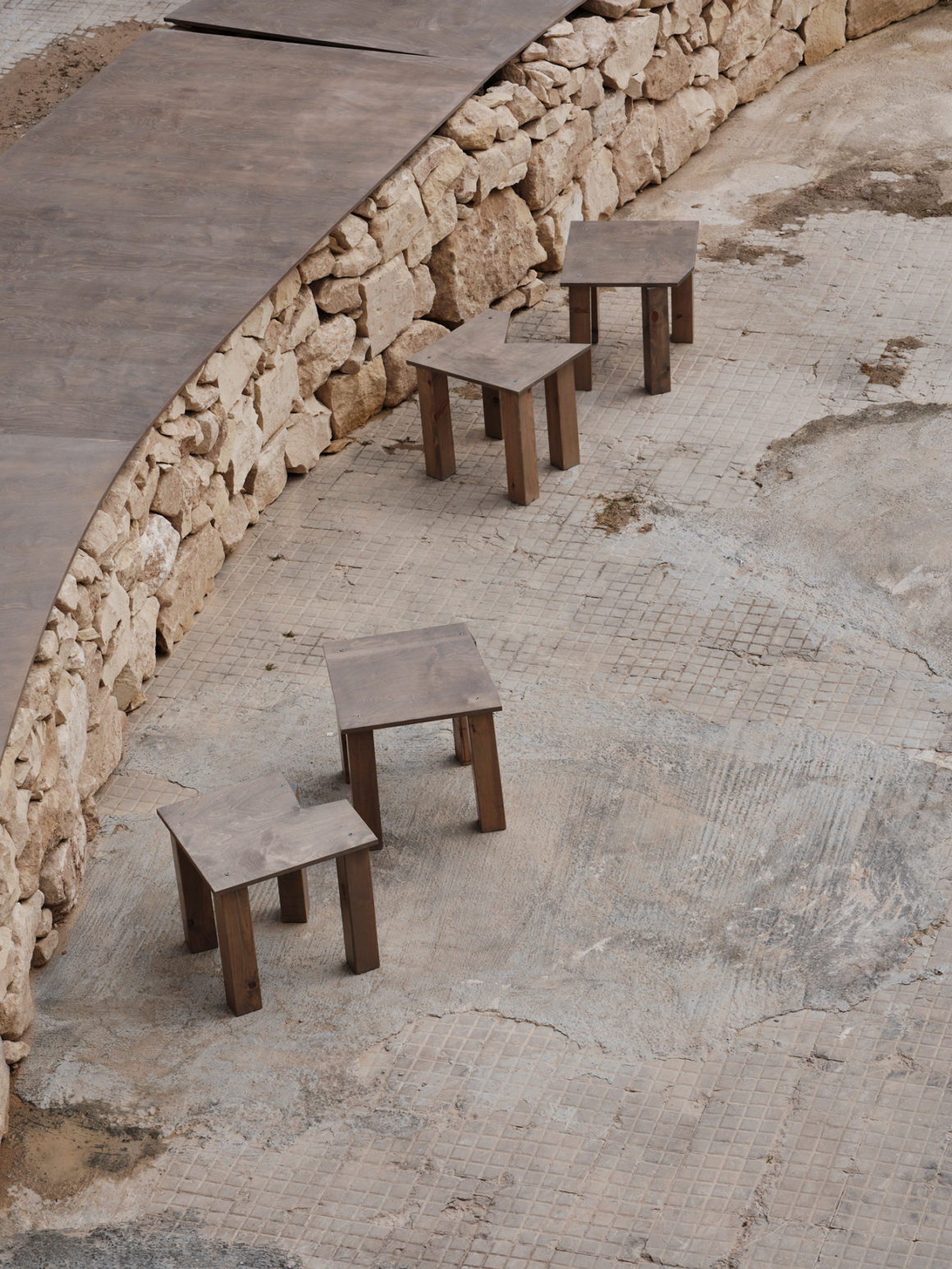
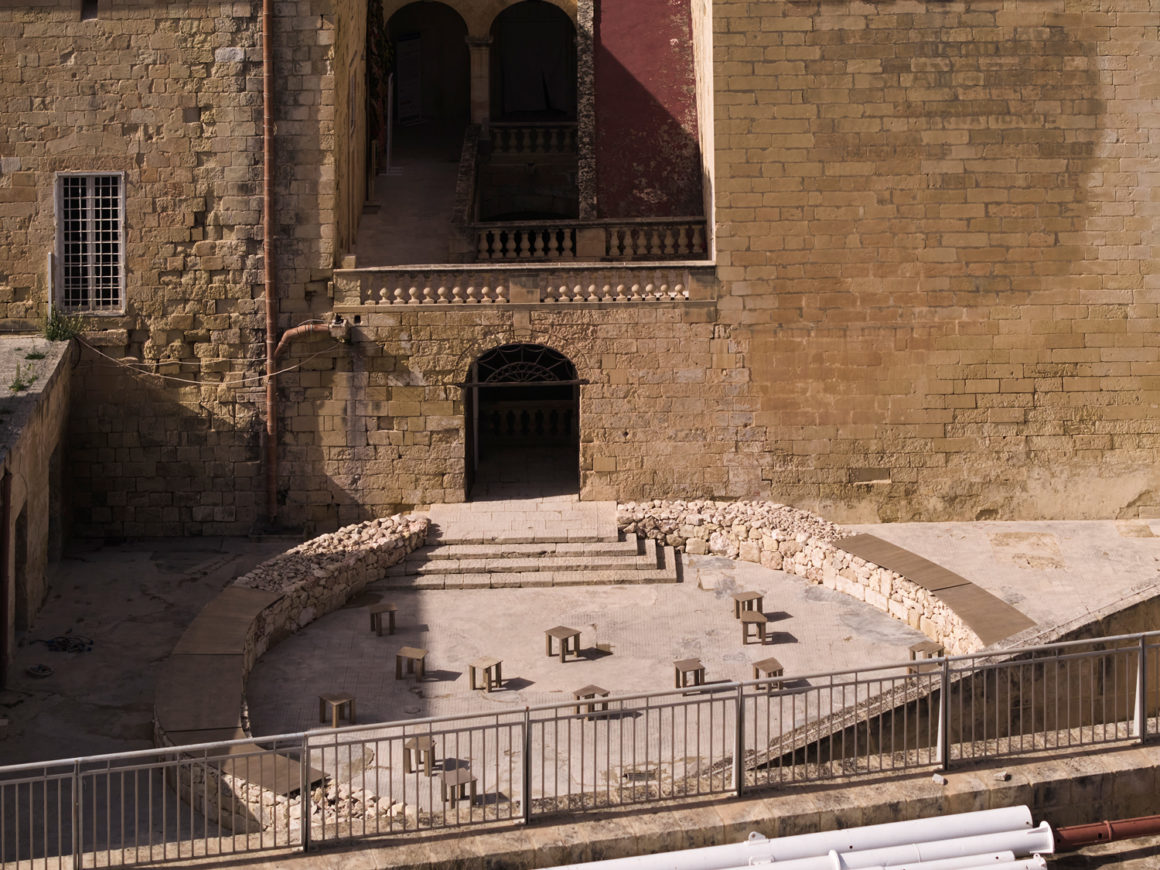
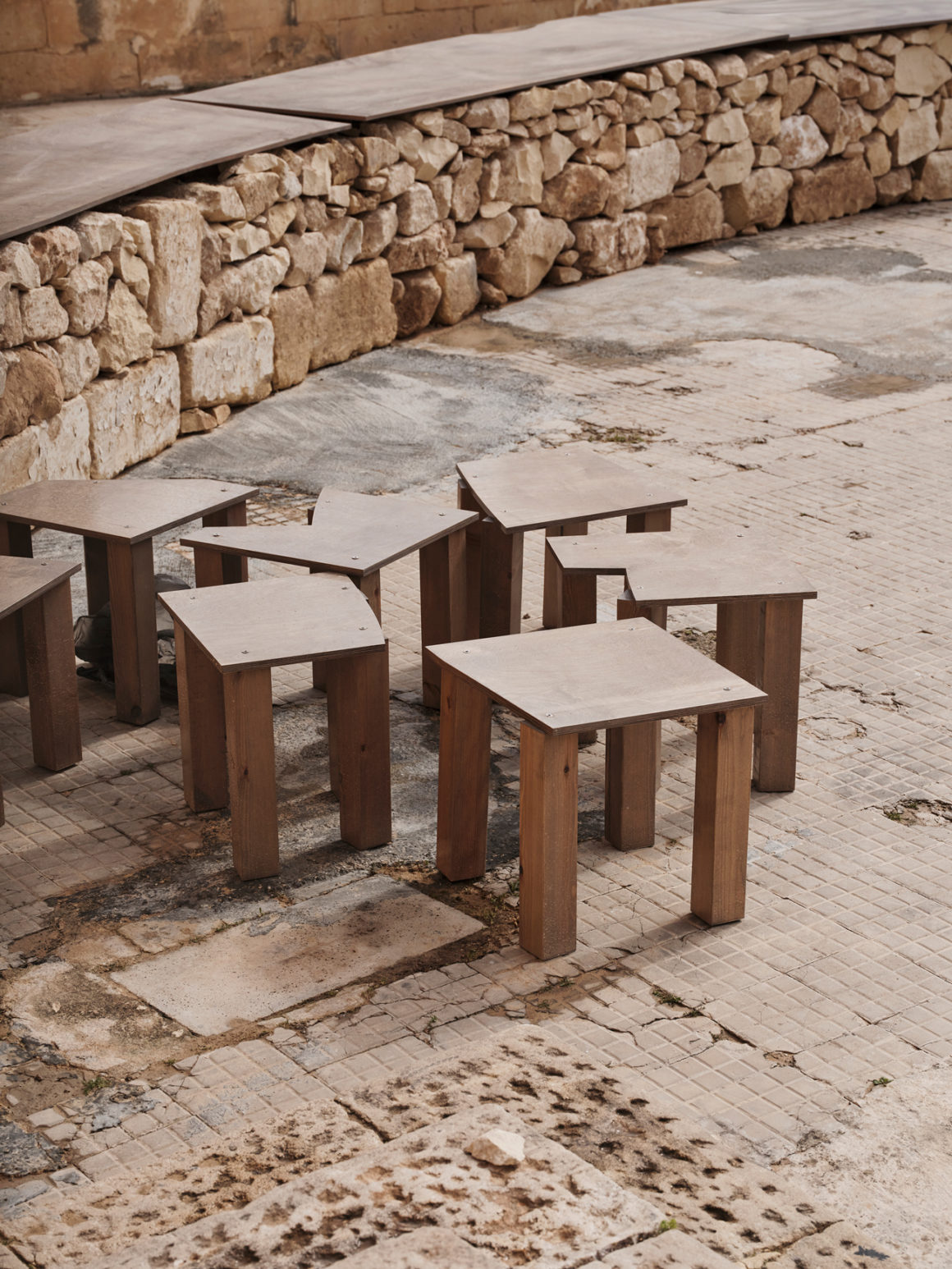
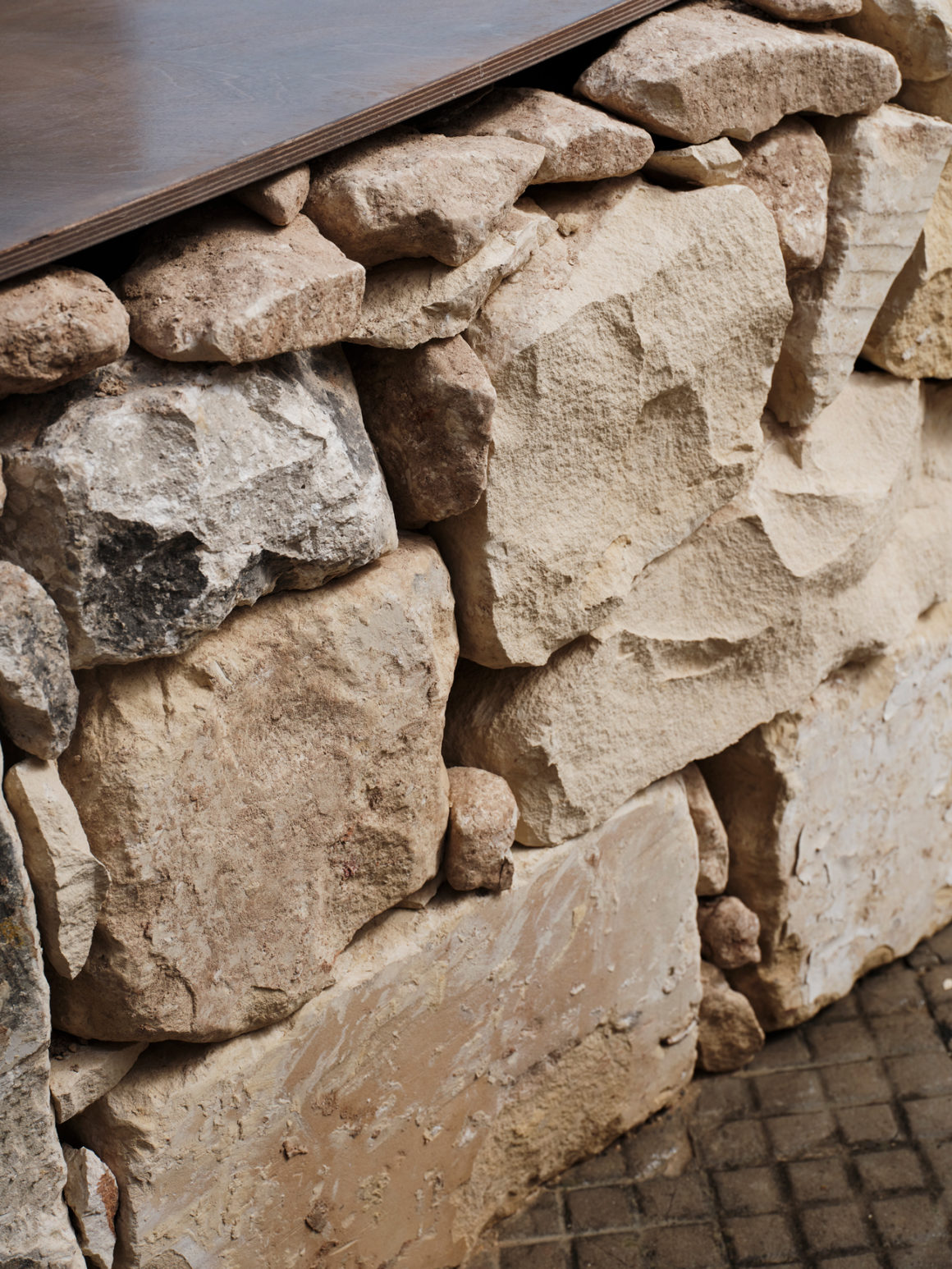
The structure is made from reclaimed local limestone, sourced from demolished buildings and existing walls across the island. This approach reduces the need for new materials and connects the installation to Malta’s existing built fabric. Along the stone form, simple marine plywood surfaces are added, creating places to sit, work or pause and bringing the piece closer to everyday use. Rather than making a bold formal statement, the project works through a subtle shift. A wall becomes a center. In doing so, it suggests a different way of thinking about architecture, less as something that divides space and more as something that brings people together.
The installation was developed by ATH LAX COLLECTIVE, the collaborative practice of Siska and Zachariadis, through which the two architects explore architecture as a cultural and social medium with a focus on material reuse, landscape and shared spatial experience.