January can feel like a closed door. February pushes it open. It’s the last month of winter, still capable of turning harsh and yet it carries the feeling of an ending. Even its Latin root points to cleansing: a month that clears the air before the season changes.
In Greece, February is also Flevaris — the month when the “veins of the earth” open. Rivers swell, streams run clear, and the landscape looks freshly rinsed. A warm spell can arrive out of nowhere, but locals rarely trust it. Winter, they’ll tell you, is still very much present.
What follows is not simply carnival. It’s a series of ritual interruptions: noise, fire, food, masks, bells. Less a program than a collective release. You don’t attend these things; you get pulled into them.
Noise as release
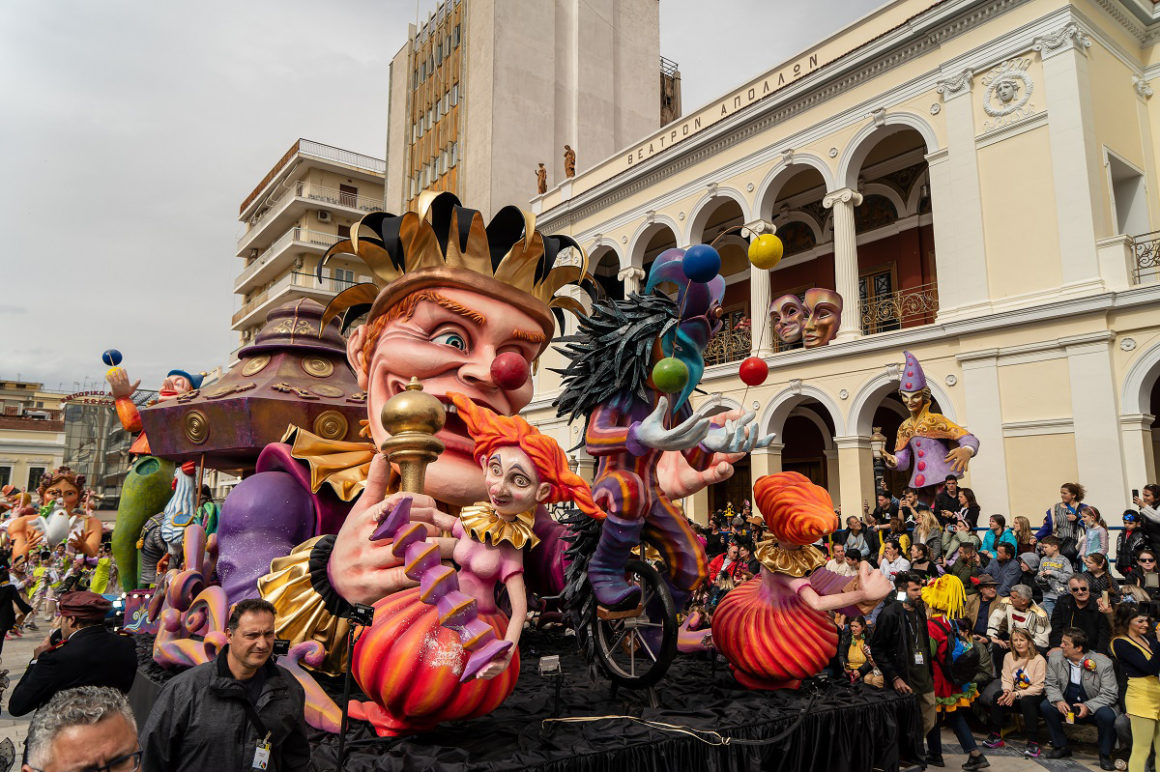
In Patras, carnival isn’t a weekend event but a prolonged state. The city shifts for weeks — nights stretch longer, streets stay full, plans dissolve easily. Costumes matter less than movement. What defines it isn’t scale but momentum.
Further north, Xanthi carries a different energy. More local, more Balkan in spirit, with parades and gatherings that feel rooted in neighborhoods rather than spectacle. The atmosphere is lively, slightly unruly, and exactly the point.
Fire as ritual
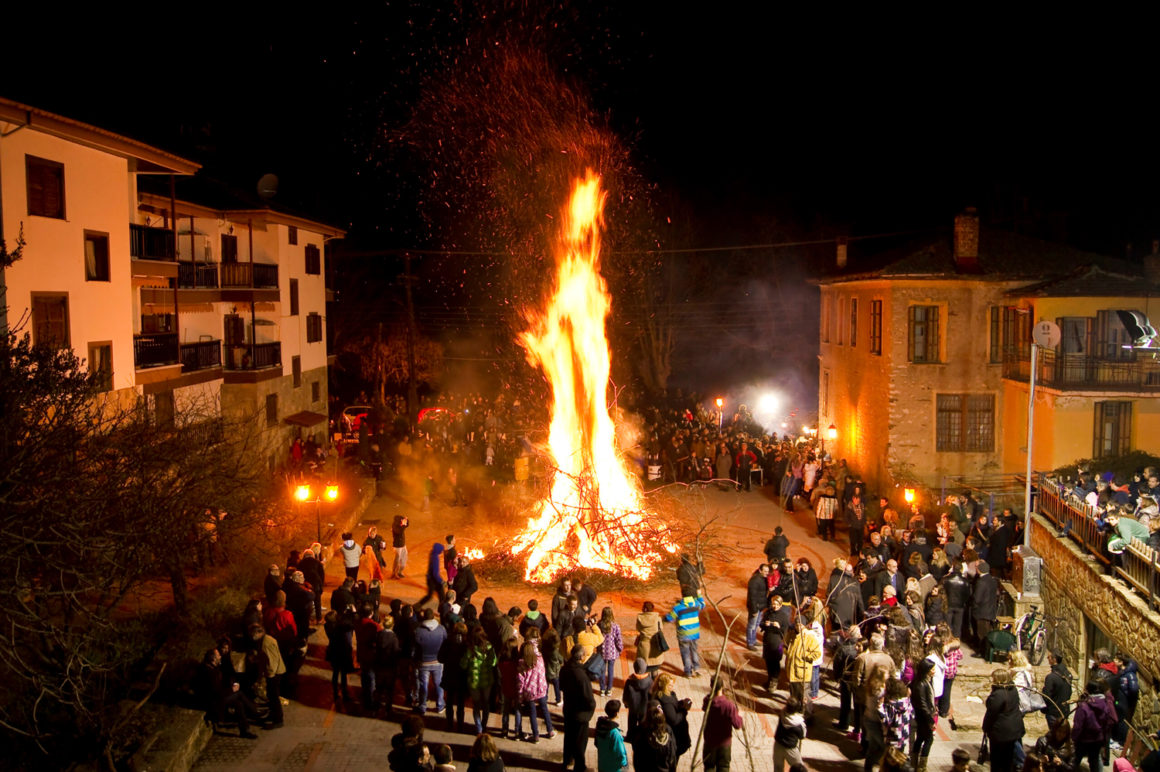
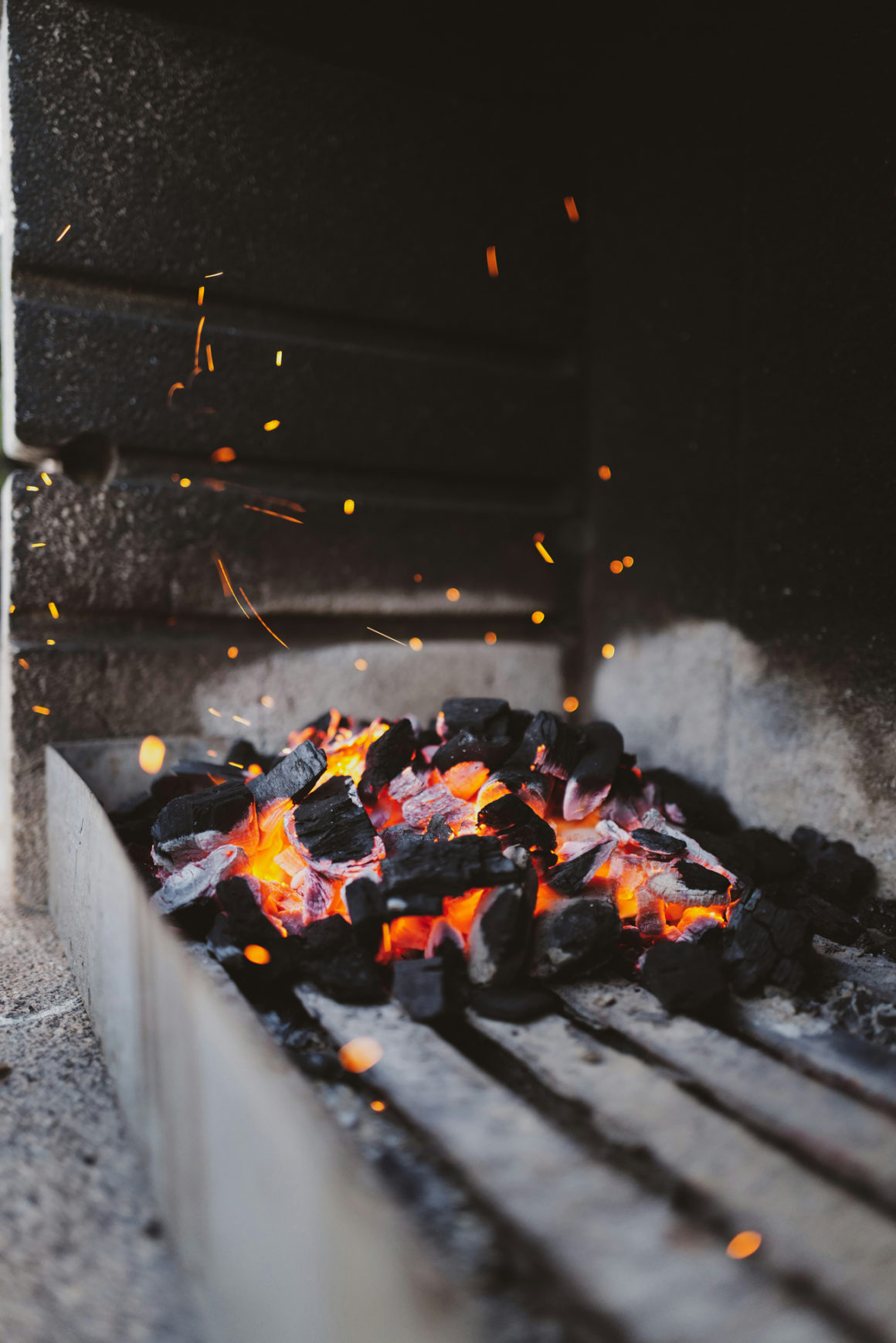
In Kozani, winter is challenged directly. Fanoi -large communal fires- pull whole neighborhoods outdoors. There is wine, singing, dancing and a kind of boldness that grows as the flames rise. The fire isn’t symbolic in the precious sense; it’s functional. It keeps people close, and it marks a turning.
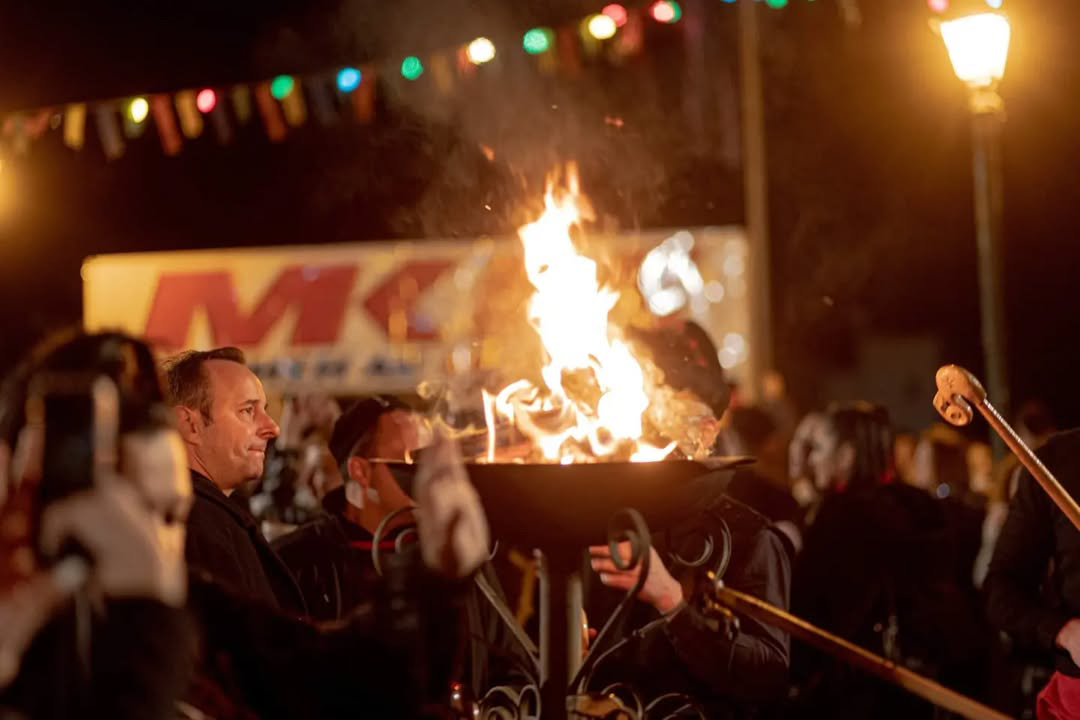
Elsewhere, the same instinct repeats in local dialects: fires that gather the town, light the cold, and send winter back where it came from. In Ioannina, Tzamales do exactly this — different parts of the city lighting their own flames, each with its own crowd and energy.
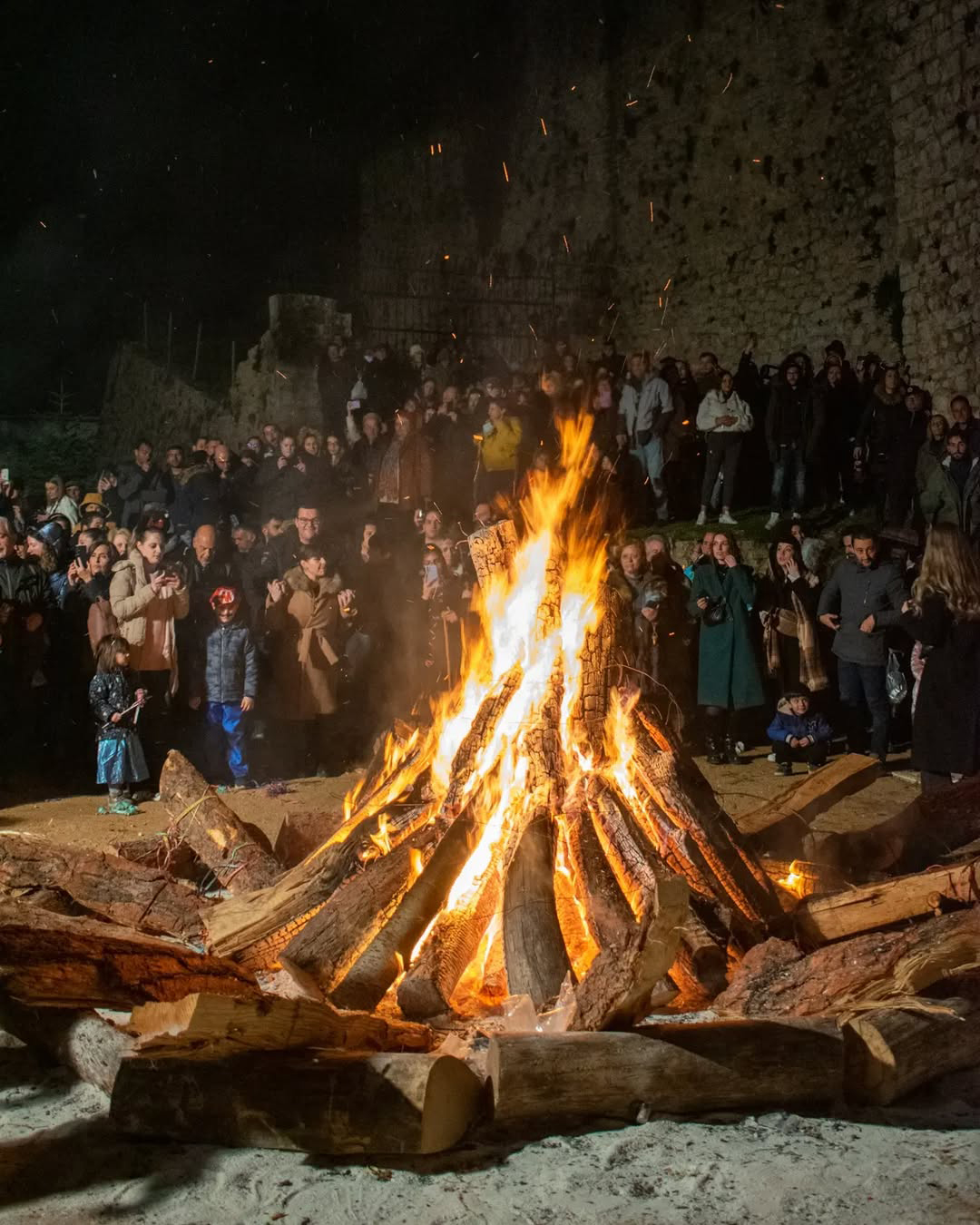
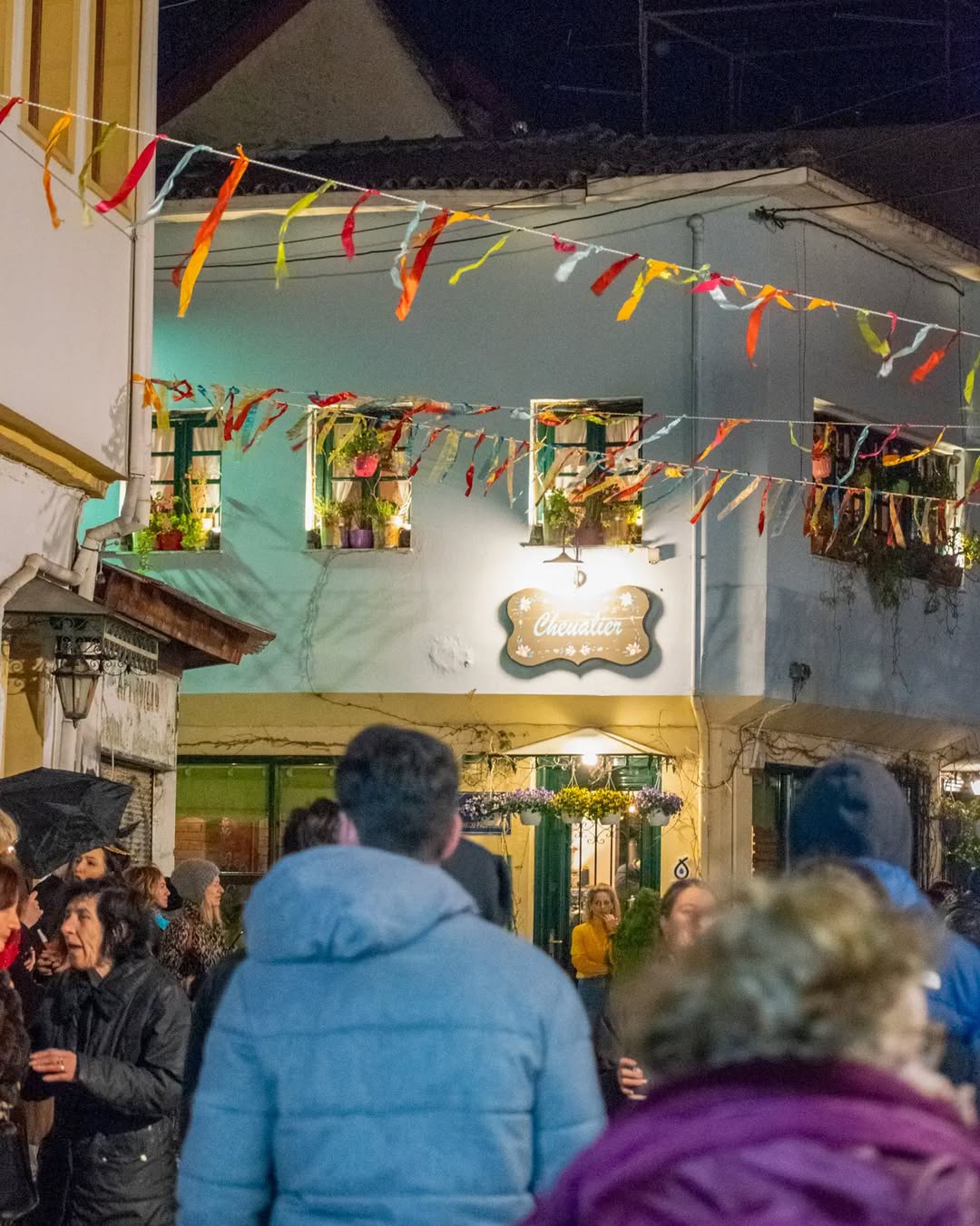
And in Kastoria, Boumpounes take over squares and neighborhoods with big fires and loud company — a northern answer to the same need: warmth, noise, and an ending that feels earned.
A ceremony in motion
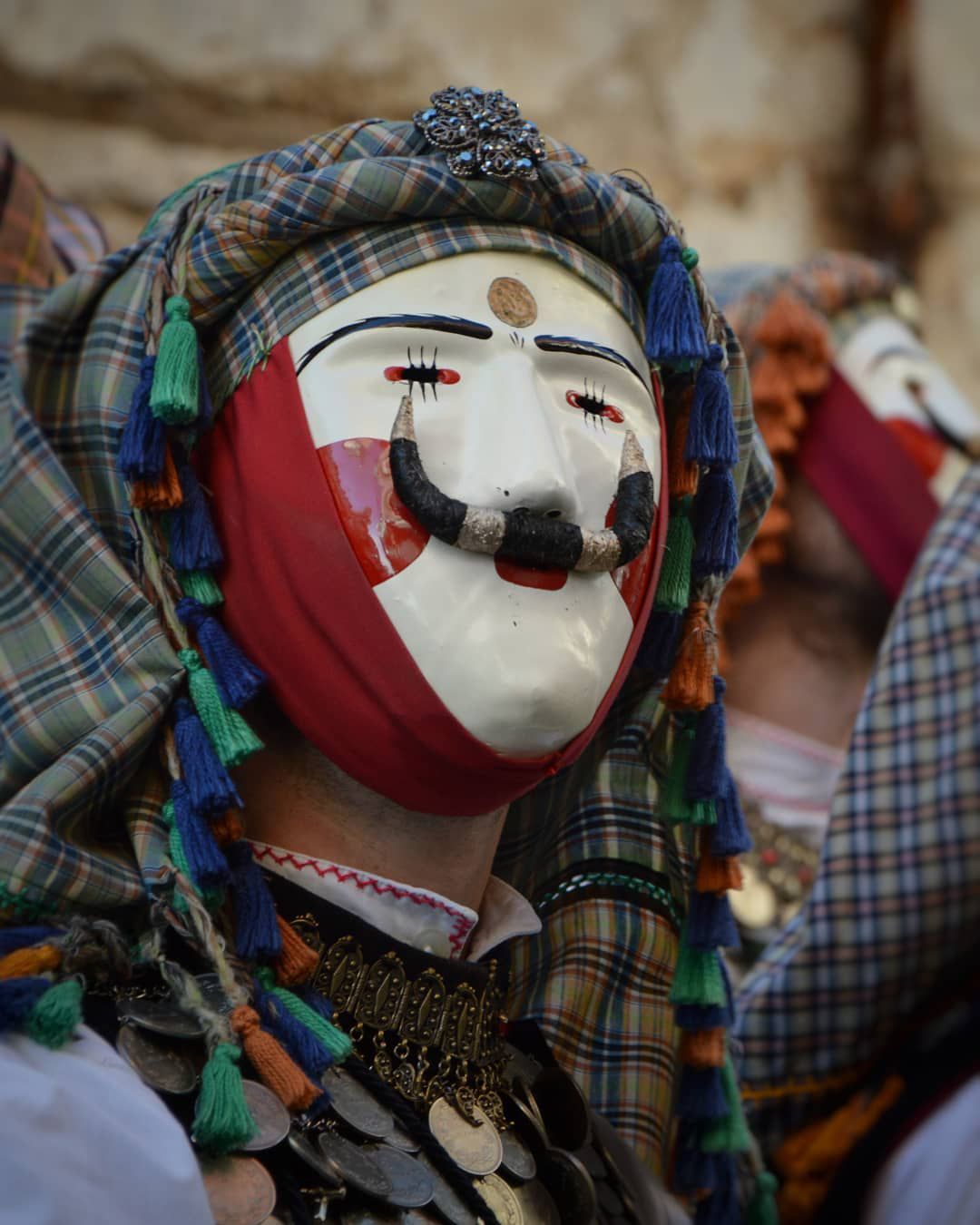
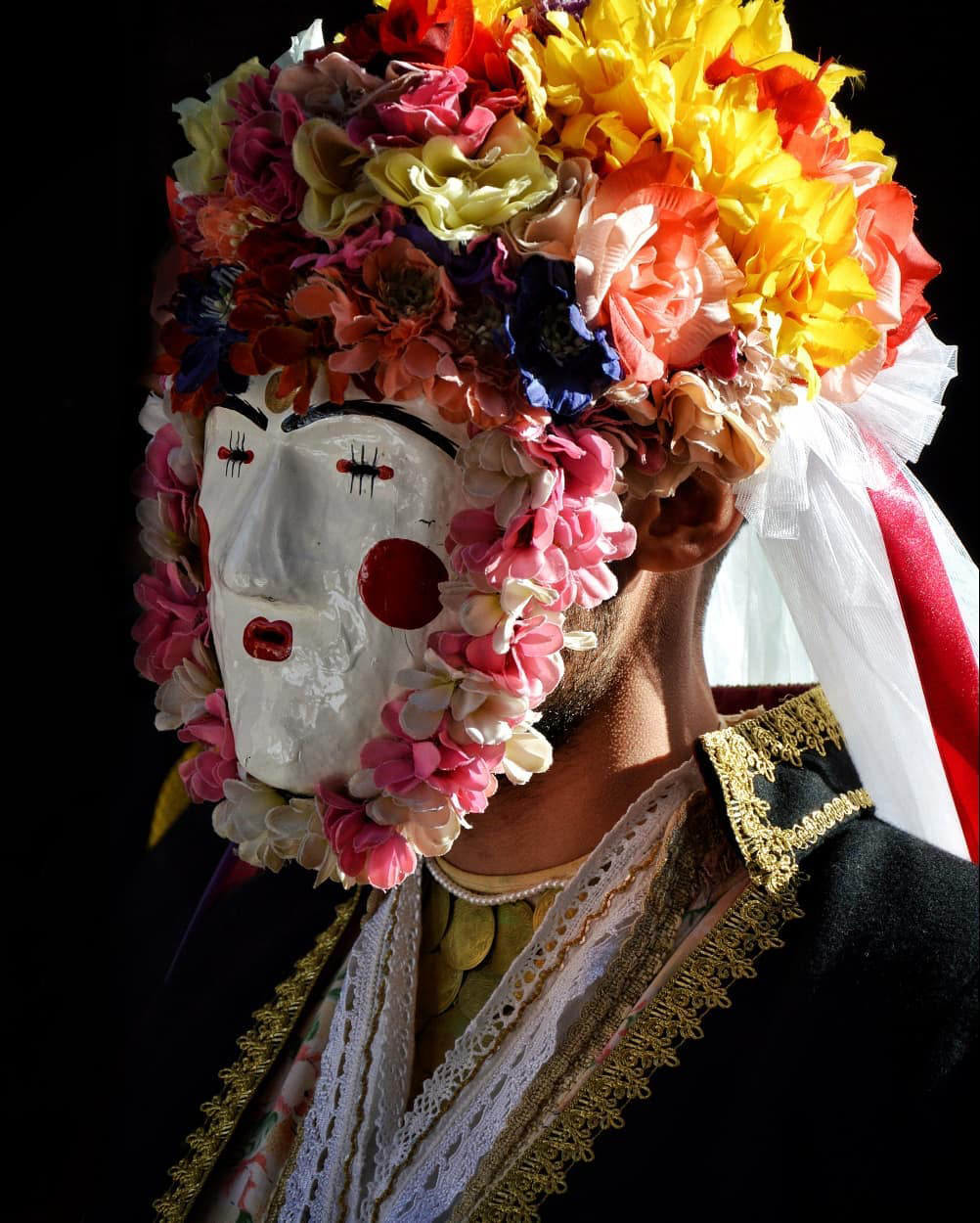
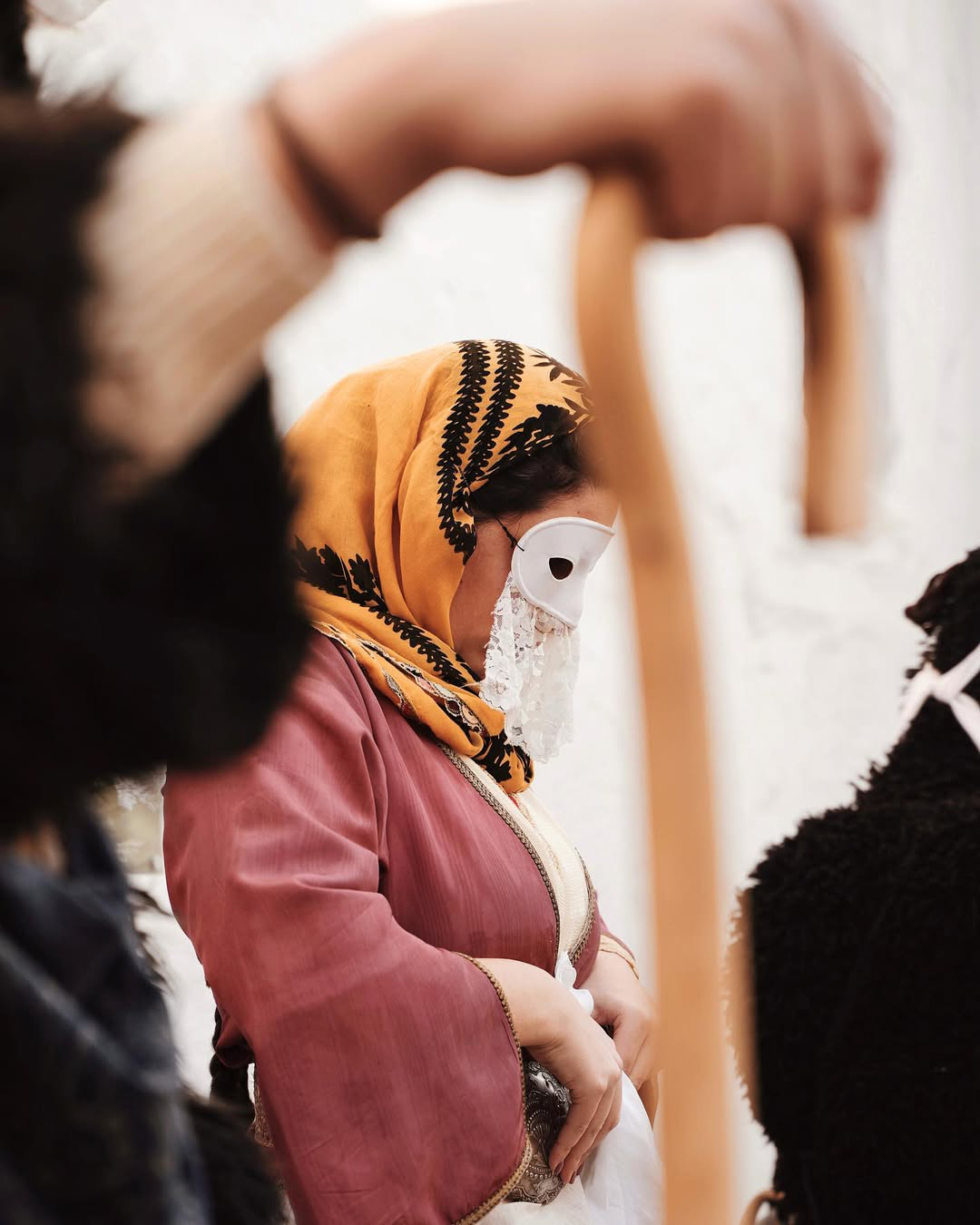
In Naoussa, the tone shifts. Genitsaroi and Boules move through the streets with precision and discipline — costumes heavy with detail, masks that keep faces unreadable, a ritual rhythm that feels closer to ceremony than celebration. It’s controlled, almost strict and that seriousness is what gives it power.
Food without restraint
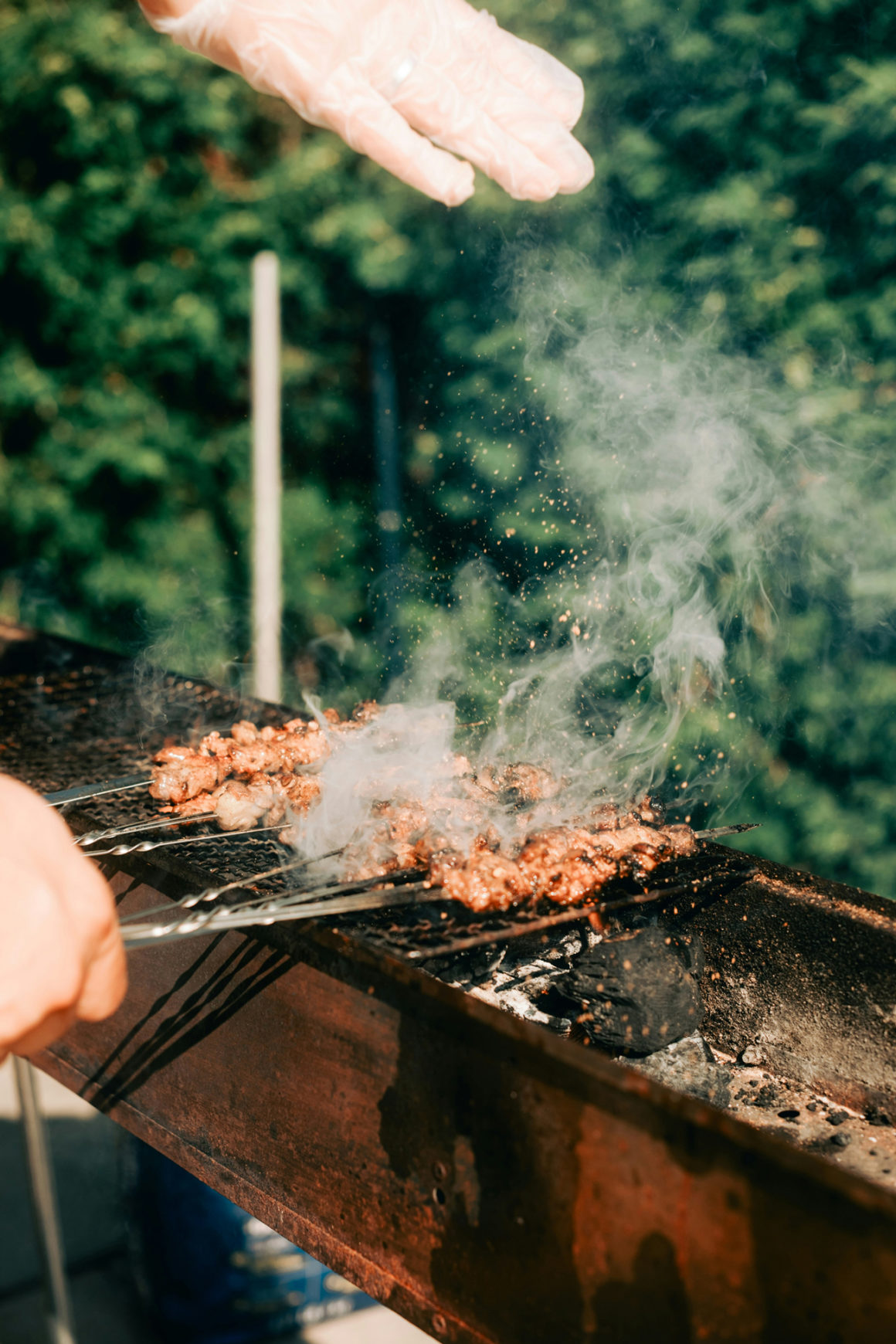
February also loosens the rules around eating. Tsiknopempti arrives unapologetically, and smoke fills streets across the country. Grills appear where they shouldn’t, tables form quickly, meat is eaten standing, talking, laughing — pause from the weight of winter, before the next season brings its own rules.
Where everyone takes part
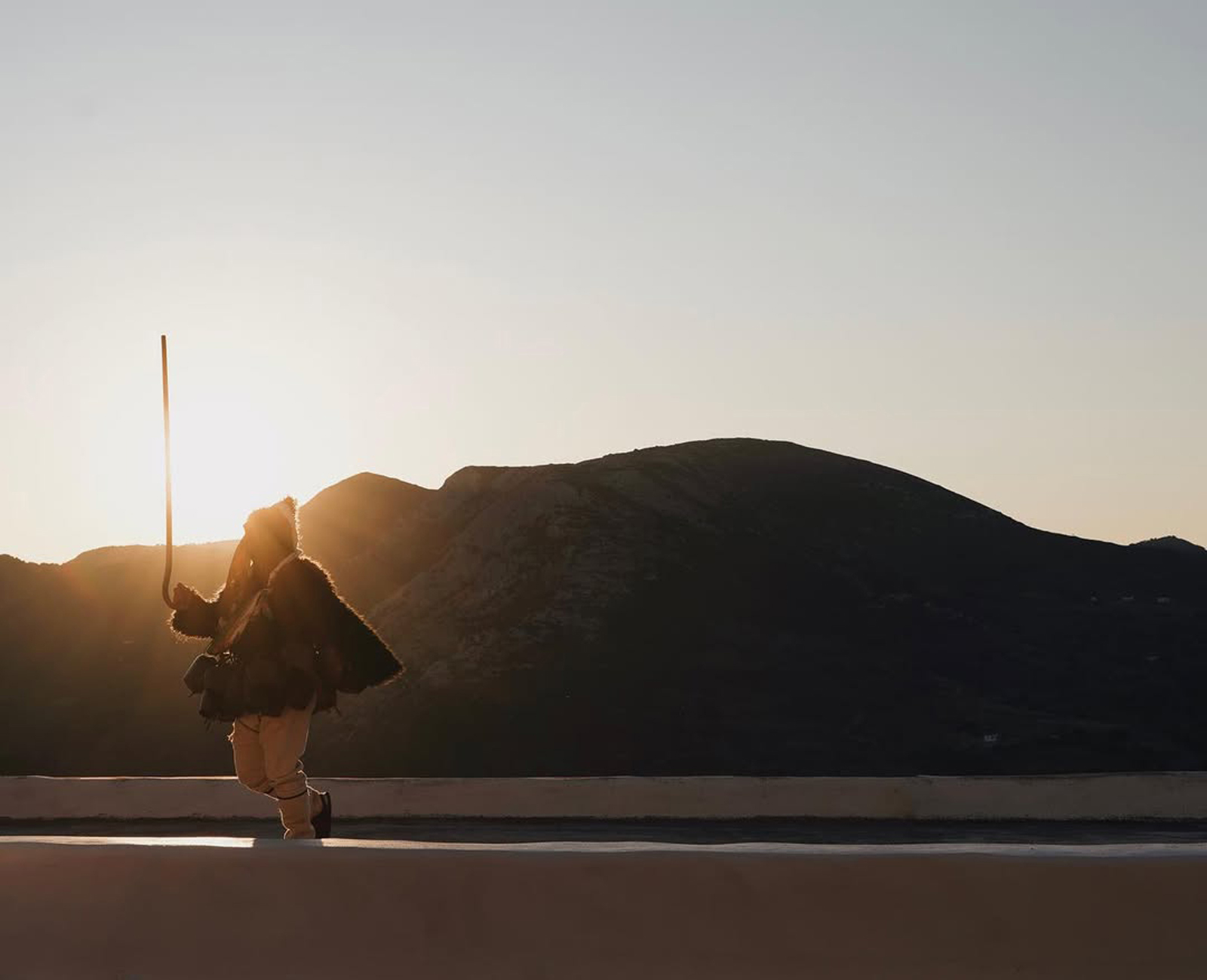
Some rituals leave no room for spectators. On Skyros Island, the sound comes first. Bells tied to Geroi echo through the streets long before you see them. The rhythm is heavy, almost unsettling, and entirely immersive. It’s not decorative. It’s physical, insistent, and impossible to ignore.
In Sochos, near Thessaloniki, the bell-wearers push that same idea even further — movement, noise and costume turning the village into a single, moving body. It feels ancient in energy, even when you don’t know the backstory.
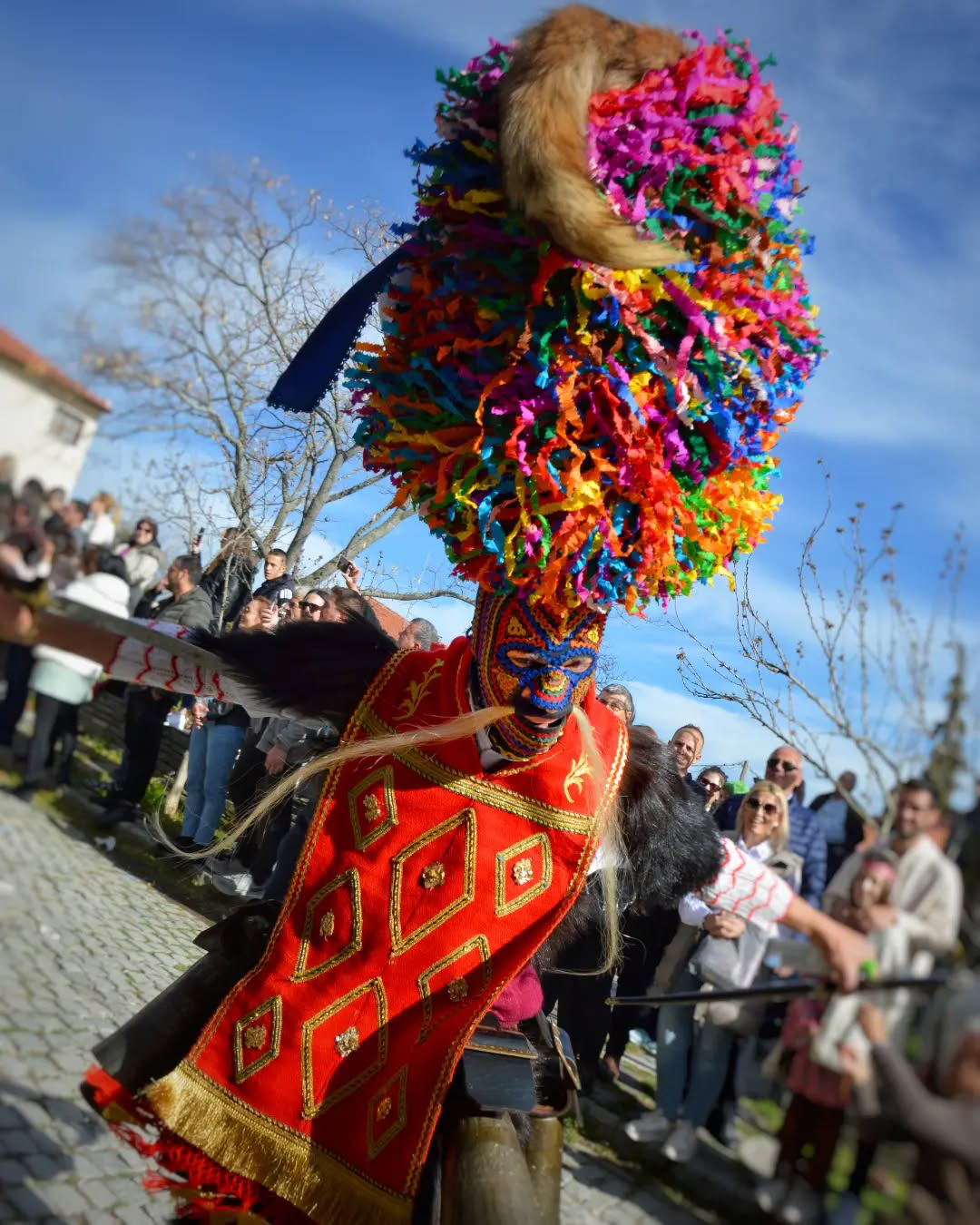
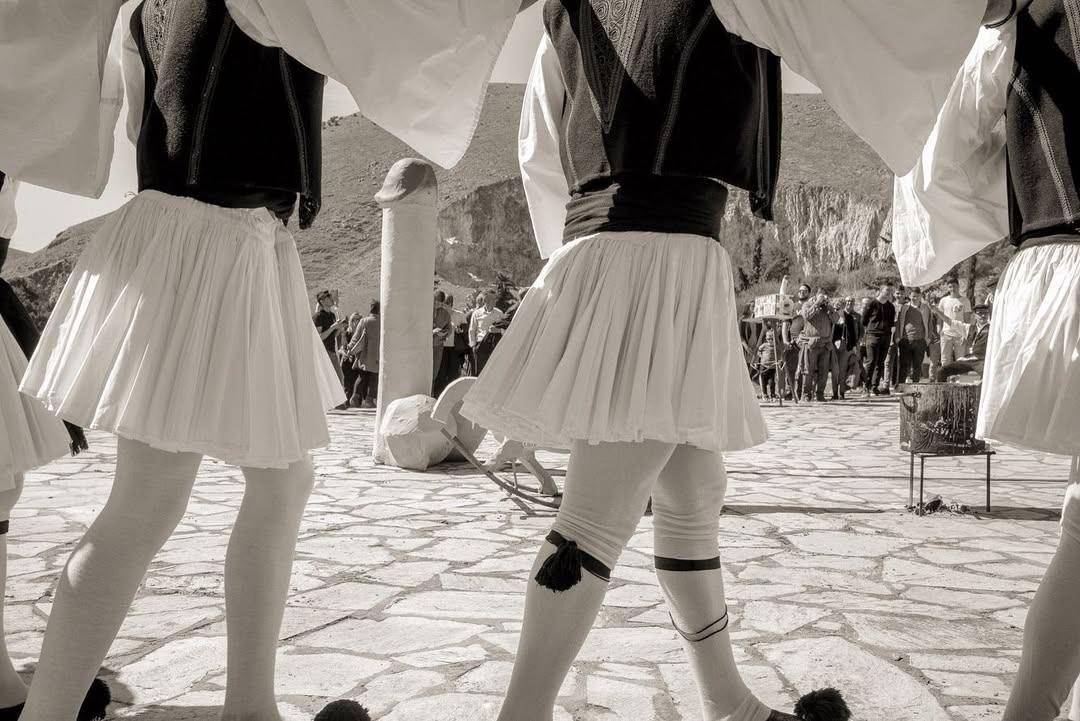
And in Tyrnavos, carnival becomes openly satirical and deliberately unpolished. Bourani is part feast, part provocation — a tradition that refuses refinement and keeps its sense of mischief intact.
The February mindset
February in Greece doesn’t ask for planning. A warm day may arrive but nobody mistakes it for spring. The point isn’t the weather. It’s the release: the way a country that has held itself together through winter suddenly chooses a bolder way forward.
Somewhere between smoke, bells, masks and crowded tables, winter begins to loosen its hold. Spring isn’t here yet — but it’s close enough to be felt.