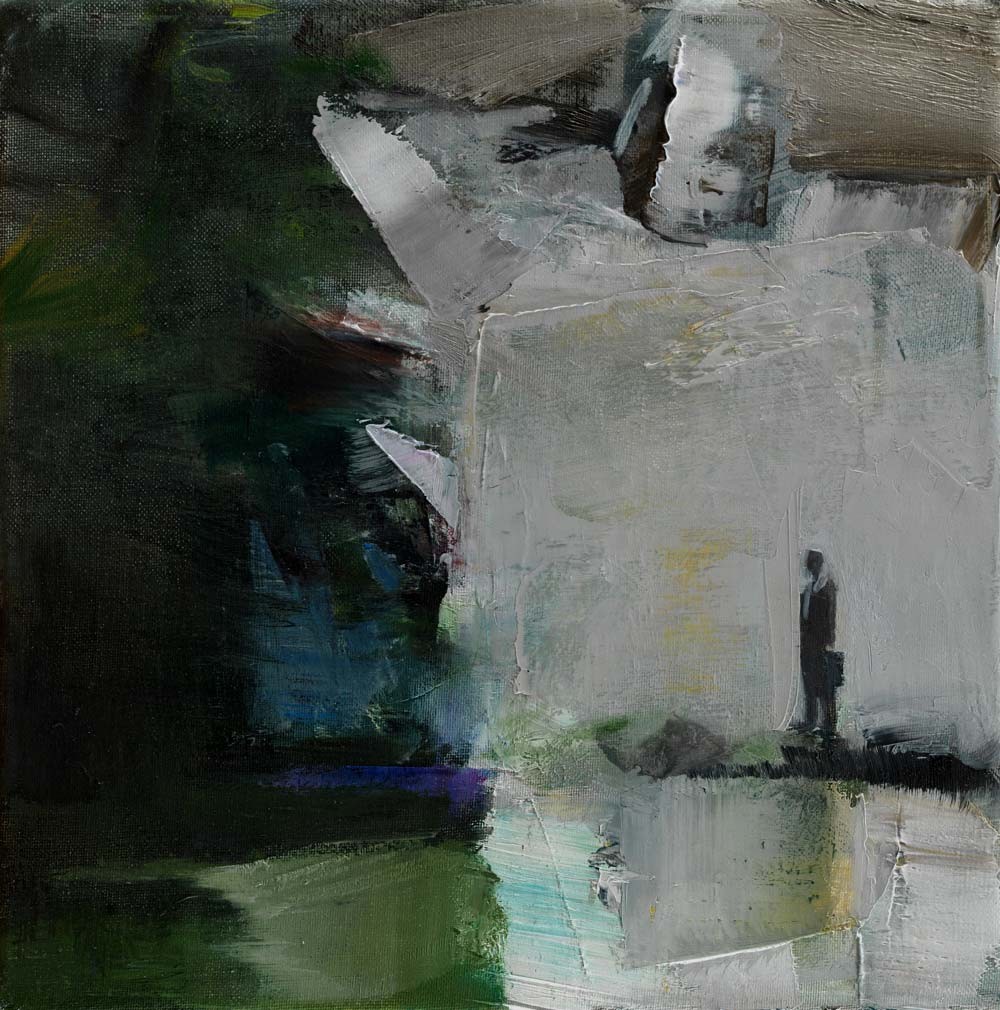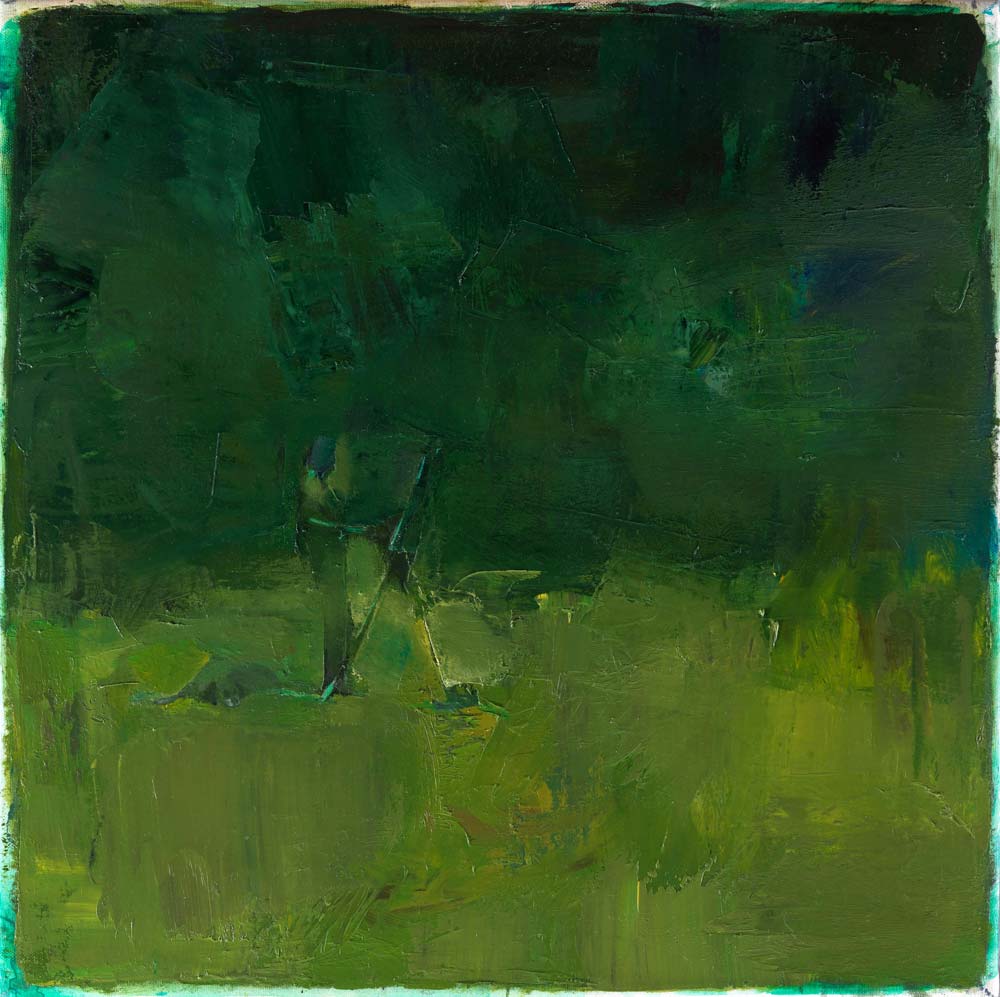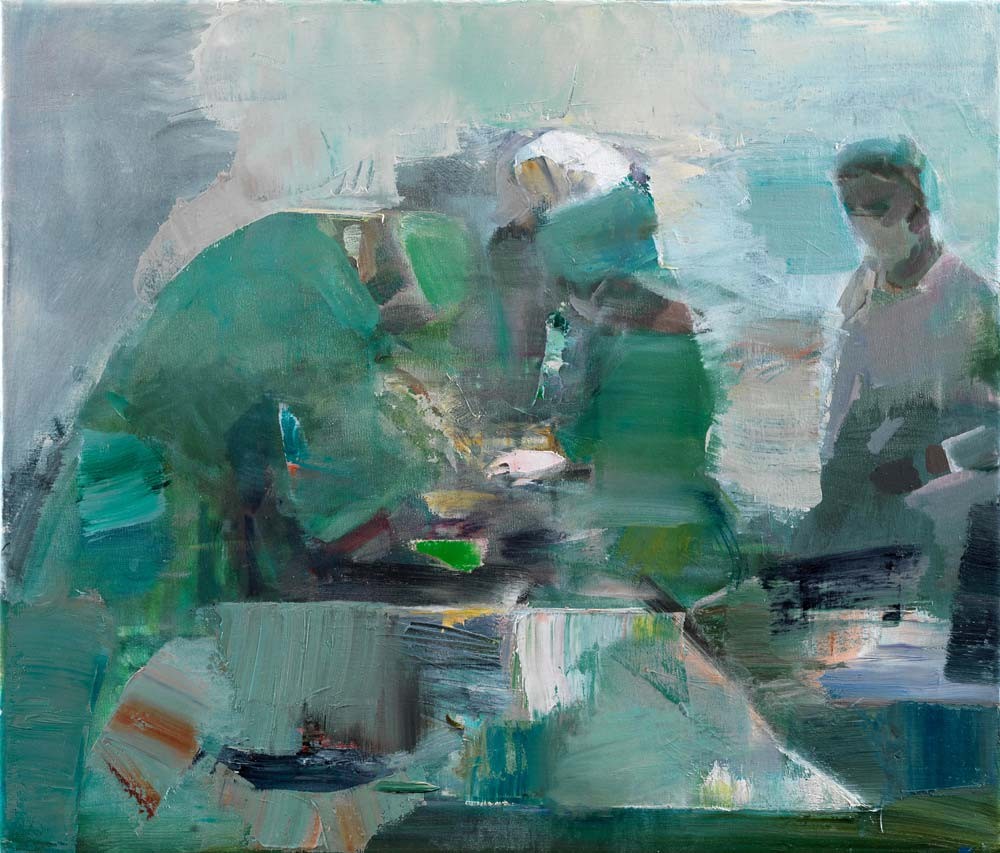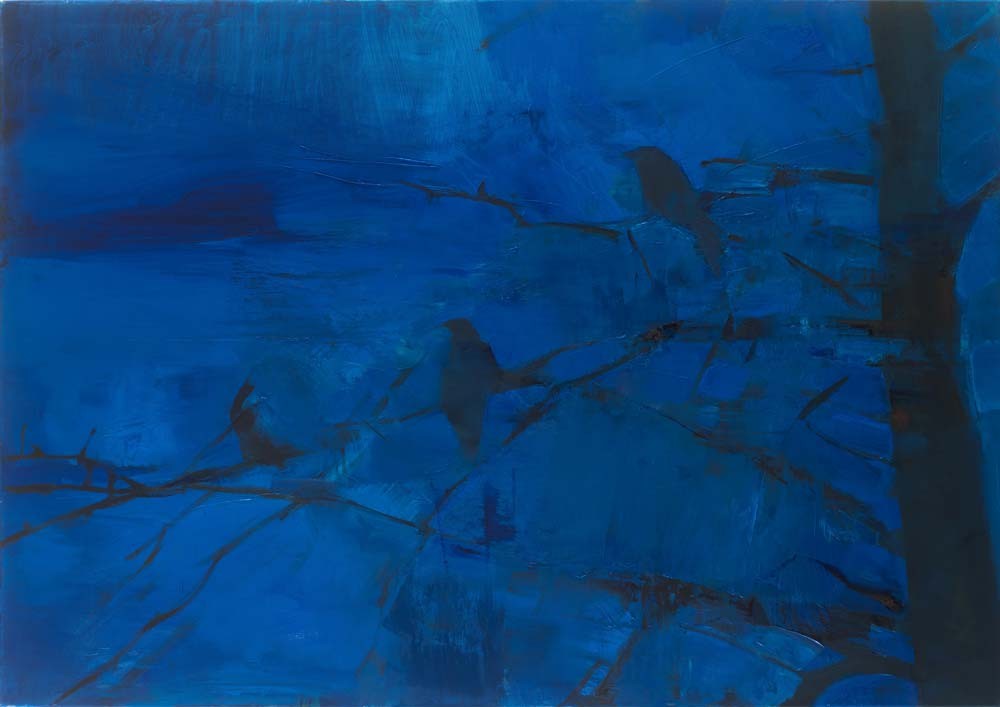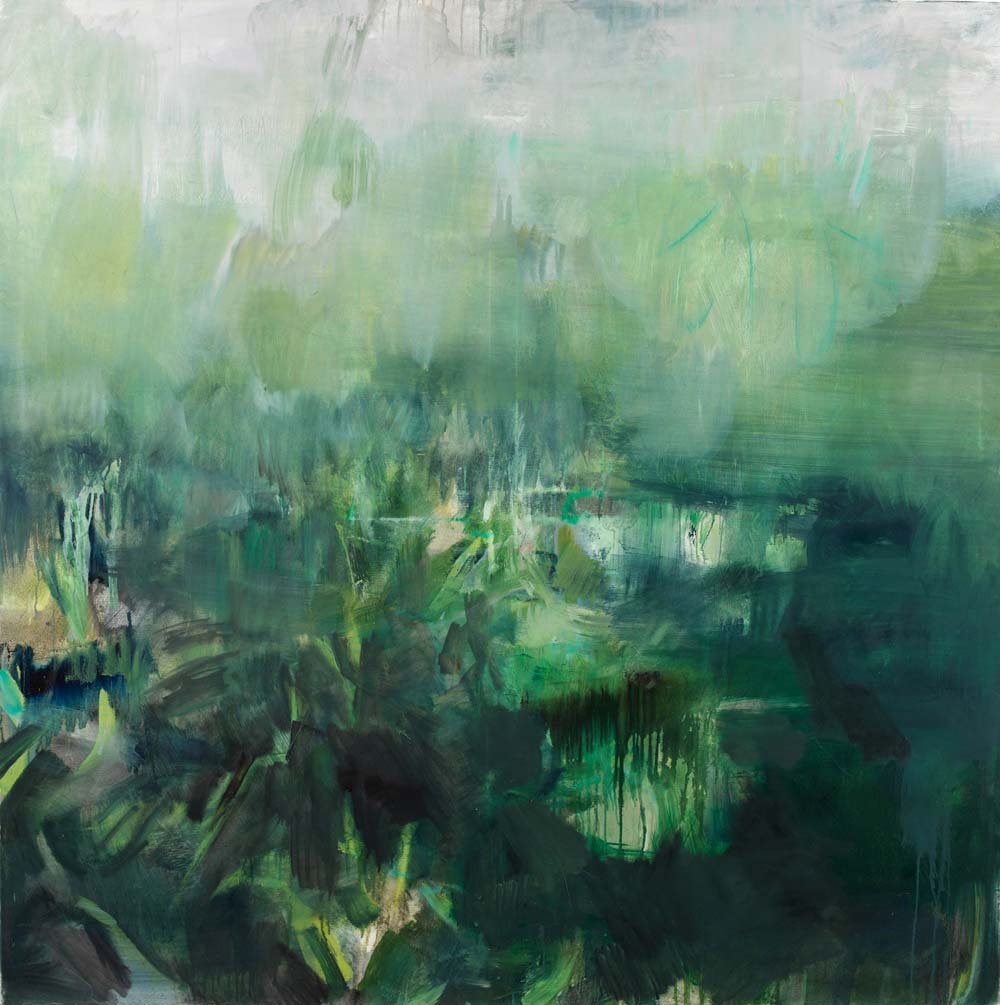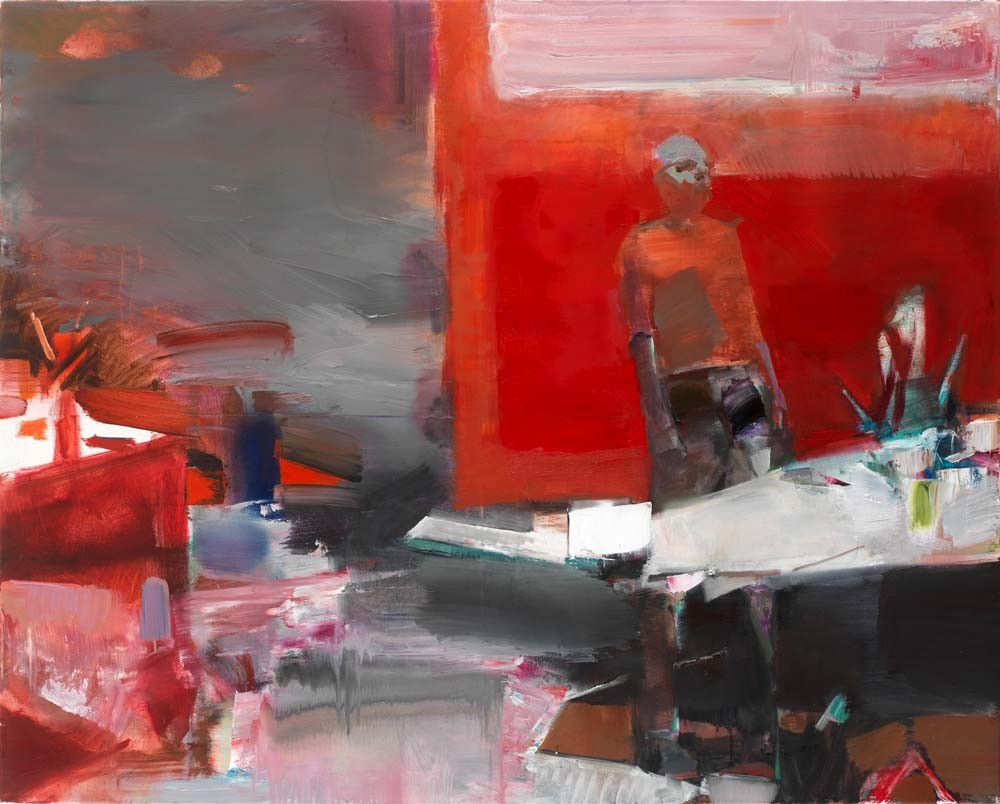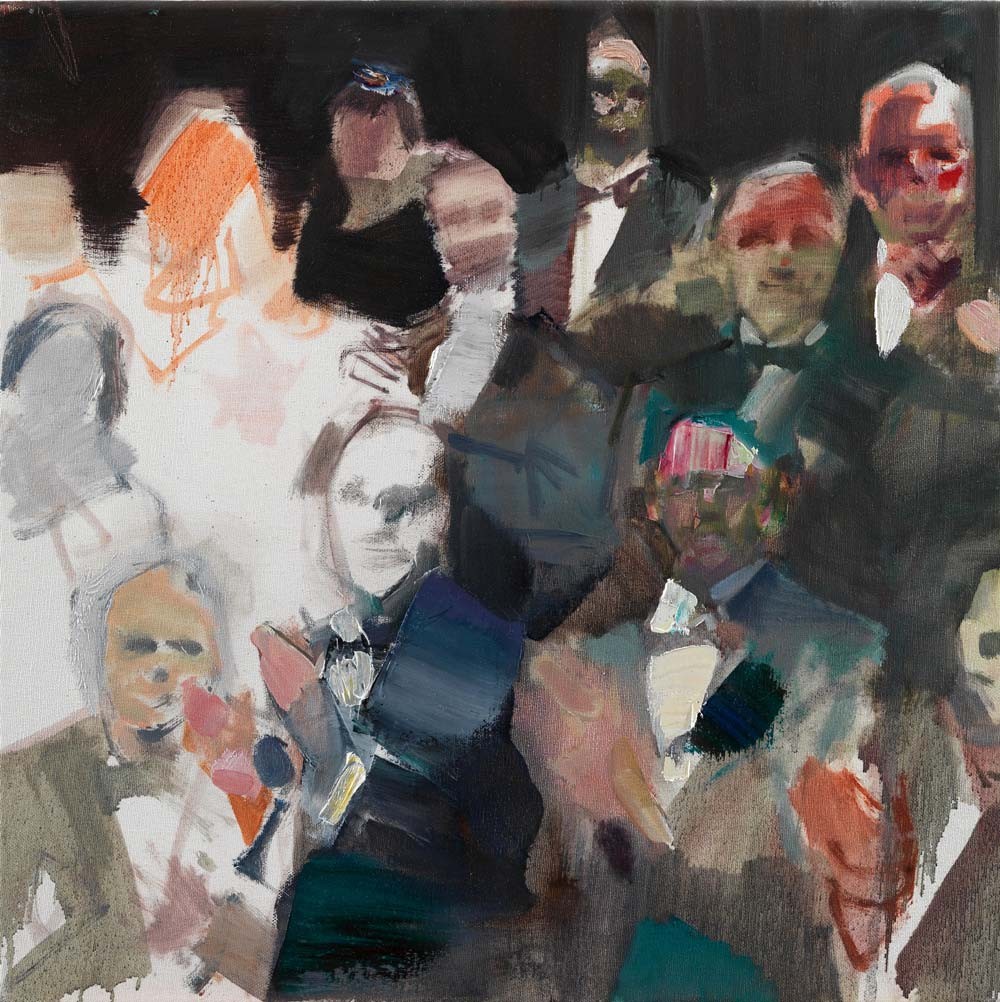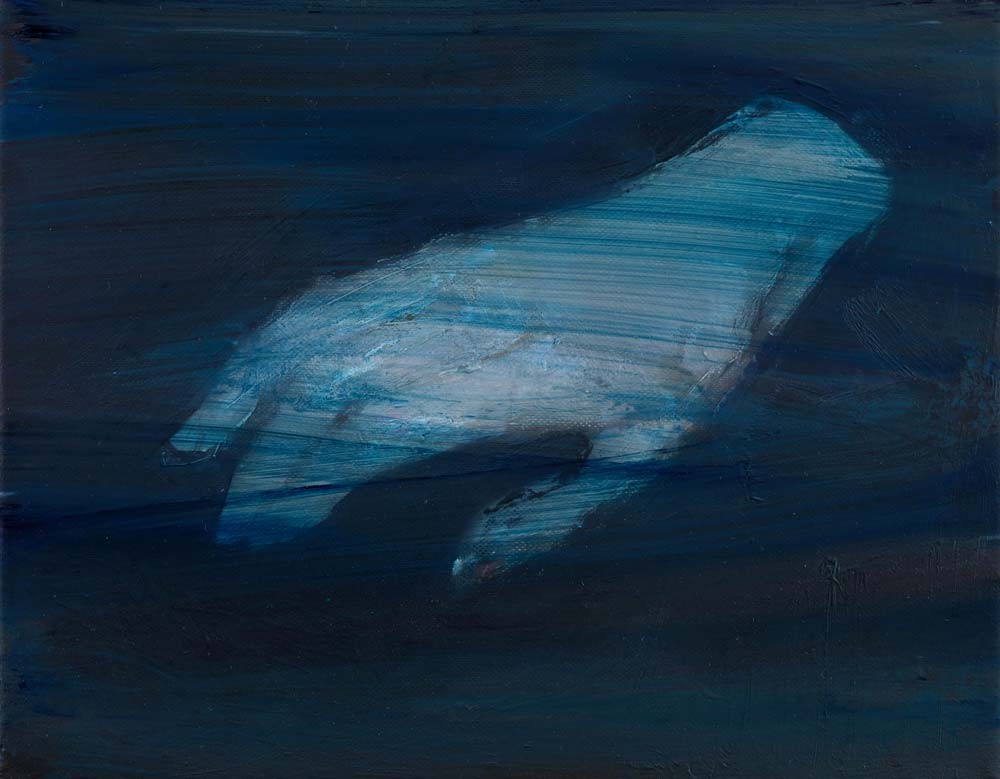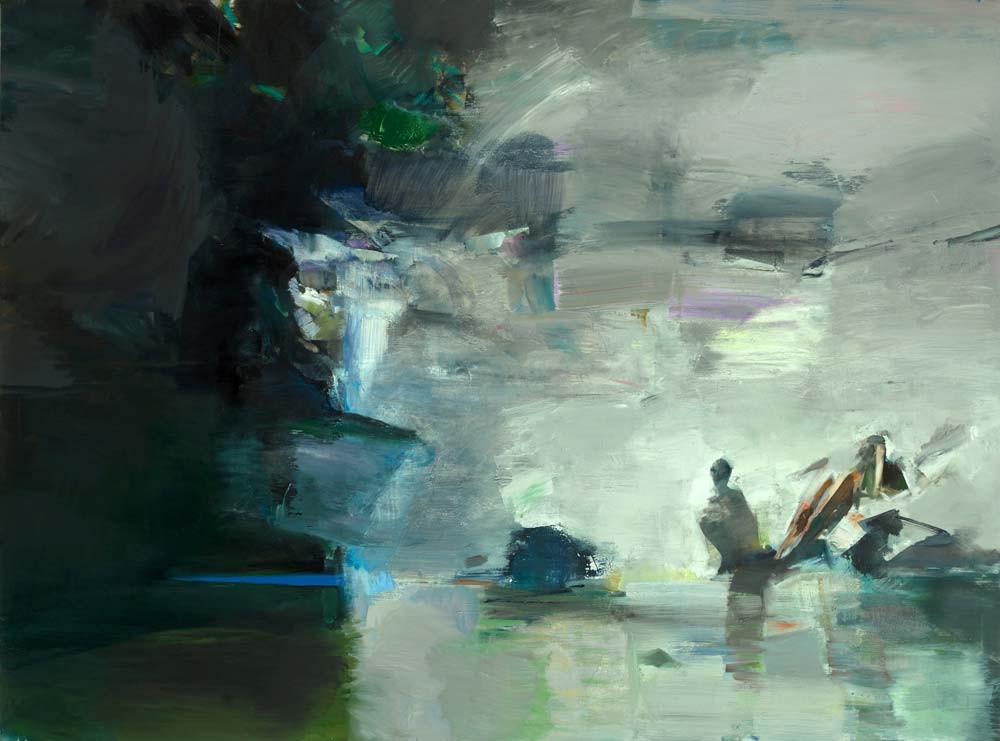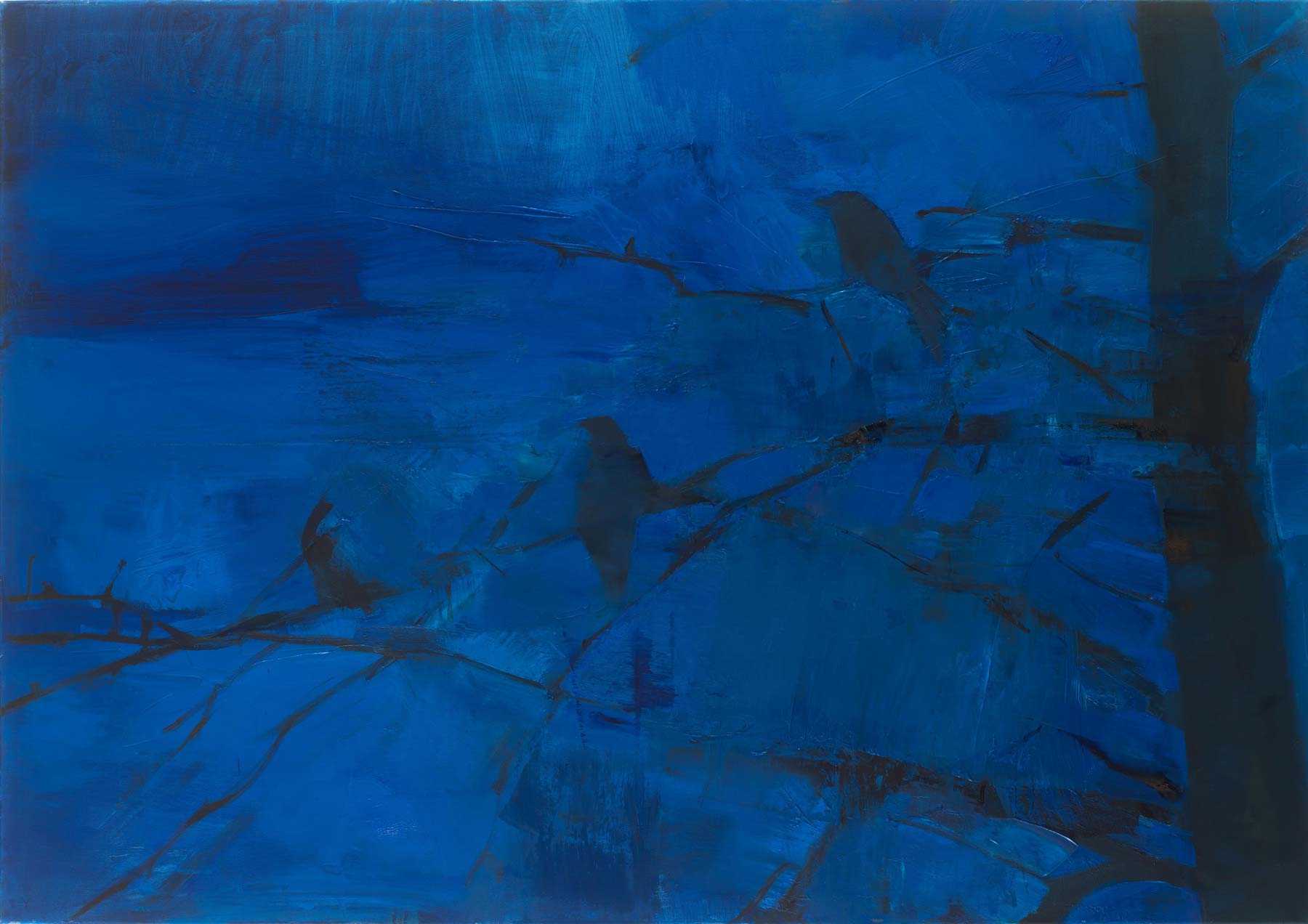
Within an interplay of large and small works, Juliano Kaglis continues to challenge the substance of painting, disputing the boundaries between reality and illusion, life and art, discovering or directing images that level amid the everyday, the enigma and the magic.
In the words of Greek art historian Manos Stefanidis:
“Art is always a matter, my darling, of life or death, as I had forgotten”
Richard Wilbur
…Or it resembles “a schoolgirl turned into an almond”
(from the title of a narrative by Evgenios Aranitsis)
“Illusion Events” is the name of a bridal shop in my neighbourhood, Nea Smyrni. It could also double as a short, though not incomplete, definition of painting. In other words, art is that illusory event which nevertheless argues convincingly the case of what reality really is. Like a girl turned magically into an almond. Like that poetic destruction that gives birth to an equally poetic creation.
I often used to write that painting produced static images, and tried to compare those to the flowing images of cinematography. Well, as it turns out, in real, that is, living painting, the kind that does not copy mummified models of the past, this static impression is deceptive. As a matter of fact, a work of painting is constantly moving, pulsating, changing, exploding, being transformed.
This is the sense I get whenever I look at the chameleonesque art of Juliano Kaglis: that it is moving. As he matures, Kaglis balances enchantingly on the boundary between representational and abstract, concrete and improvisational, between what is identifiable – by whom and how, I wonder – and that which remains elusive, immersing itself in a lake of translucent dreams, turpentine colours and silky darkness…
You see, in Greece we have a group of painters who are very unhappy due to an obsession with modernism that keeps them from painting; and when they do paint, they feel incredibly embarrassed. Fortunately Kaglis is spared from this particular source of anxiety. On the other hand, I like the way the painter restrains himself, not knowing when a painting is finished.
¬―Never! I would unreservedly answer, were my mind not fixed on A. Camus’s words: “Art lives only on the restraints it imposes on itself, and dies of all others…” Therefore a work of art is ‘finished’ or ‘unfinished’ as long as it preserves its mystery. It’s as simple as that. In a way that conjures up not the question “What is being depicted here?” but rather “What can I, after all, see in front of a pulsating image?” And all that depends on the context of time or the public’s subjective perception. In other words, a work of art is initiated by its creator but is completed, insofar as possible, by the eyes of the discerning viewer.
A romantic of the modern era above all else, Juliano creates pretexts of landscapes, mystical explosions and forms subtly portraying their own fate; or things portraying other things; exposed to either a blessing light or a forgiving darkness. In his own words: “If art doesn’t have a kind of magic, it does not interest me (…) Because art is a needed illusion”. Absolutely!
P.S. On a different note: Greece has an abundance of intellectuals but a serious lack of intellect, of original ideas. Fortunately this is not the case in art ― our last hope.
And on a more personal note: In our little corner of the world, everyone knows exactly what my flaws are because they won’t acknowledge any of my merits. This is the dominant stance in the world of art and intellect in contemporary Greece: the bitterness and tyranny of mediocrities. I hope my friend Juliano remains as unaffected as possible by all that, in order to carry on, free of negative feelings, with his bittersweet, translucent painting.
Manos Stefanidis – 09.12.2014