Afroditi Krassa’s vision for this contemporary Indian restaurant in London was clear from the beginning: no stereotypes, no clichés, but a totally unexpected design. Rather than looking into some of the blunt, contemporary offerings of Bombay, the studio drew from the city’s rich past and the honest, resourceful and functional design solutions that have developed throughout its chequered history. Old and fading Irani cafés, street stalls and other down-to-earth eateries are all perfect examples of an unexpected and classic Bombay charm.
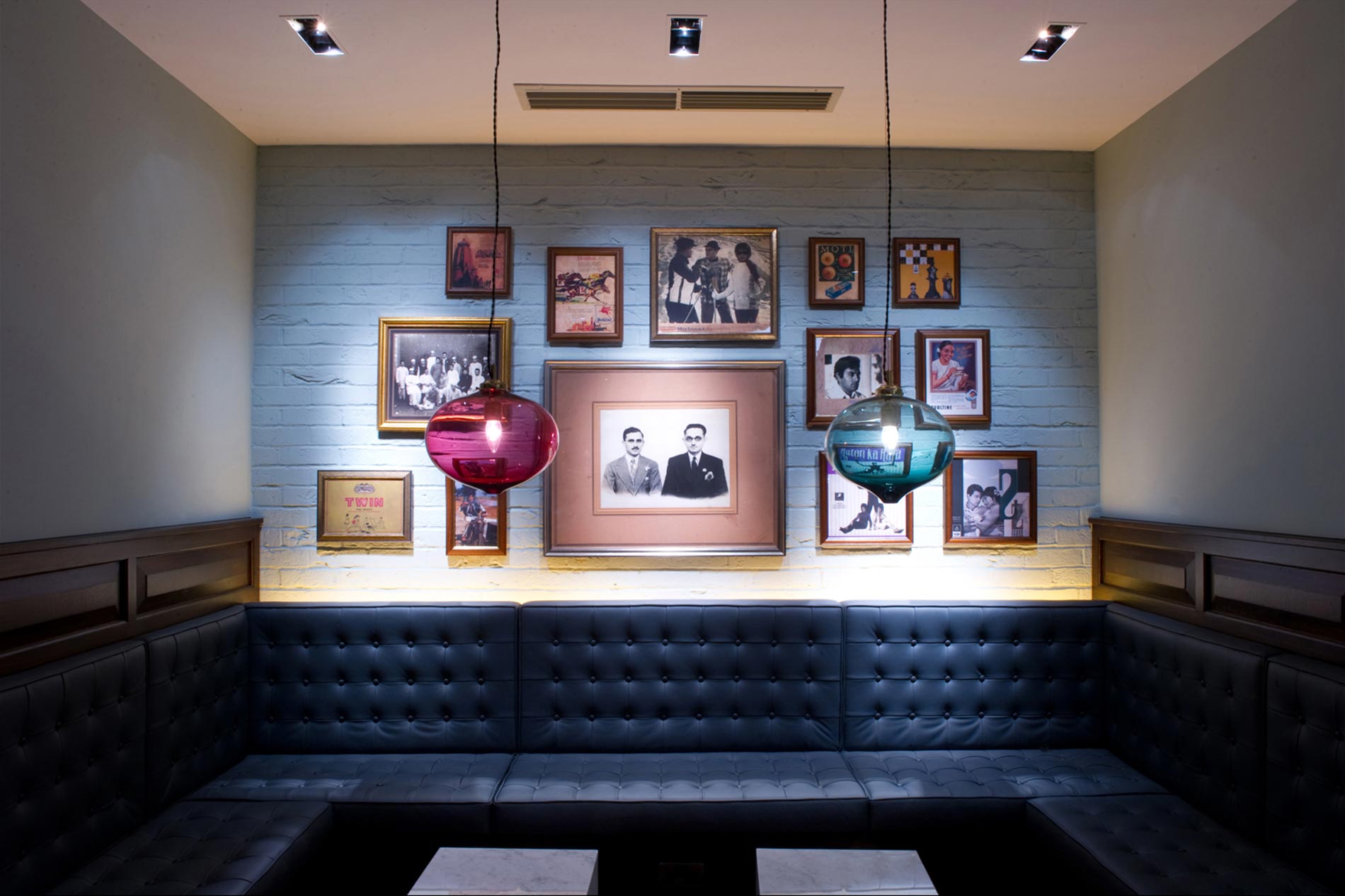
The concept was developed to encompass all aspects of a restaurant business, from the menu offering to service, design, ambience and market positioning. The identity pays respect to classic fonts, old school vignettes and the visual appeal of Hindi. The interiors combine elegant, sophisticated and simple lines with an influence from Bombay’s art deco past.
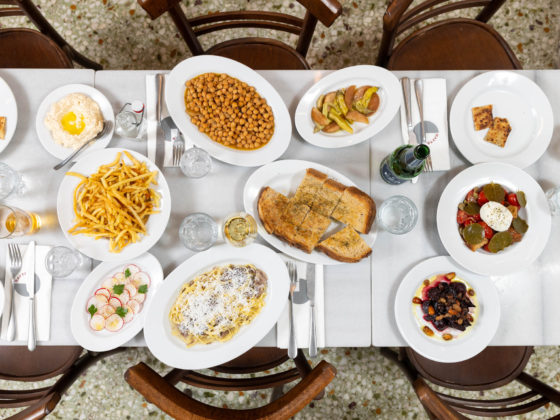
The checkerboard tiles, oak panelling, white Carrara marble topped tables and mismatched chairs create a relaxed, democratic café style space, in keeping with the food offering. A strict, monochromatic color palette has been used throughout, combined with retro Bombay portraiture and 60s graphical, pop imagery.
Subtly exotic and classically urban, Dishoom is a far cry from UK Indian restaurants, avoiding all expected clichés that come hand in hand with the territory, yet respecting the overlooked beauty of everyday India. Located in Upper St Martin’s Lane and occupying a site of 5,000 square feet, Dishoom is an all-day Bombay café. ‘Dishoom’, by the way, is an old Bollywood term, an expression a little like ‘Pow!’ or ‘Bam!’ which also encapsulates the optimistic energy of the concept and design.